
 en
en
 English
 Español
 Structural Strengthening System Service Provider
Product
Company
News


Content
A concrete patch usually fails where the new material meets the old one. Unmodified cement-sand mortars shrink as they dry, bond weakly to the prepared substrate, and open a hairline gap that admits water and chlorides — the very corrosion cycle you were trying to stop. Polymer-modified concrete repair mortar exists to break that cycle: the polymer phase raises bond strength, cuts permeability, and gives the patch enough flexibility to survive thermal movement and vibration. For structural spall repair on bridges, tunnels, columns, and industrial floors, it is the specification to start from — provided you know which polymer you are buying and how to place it.
This article covers what the polymer actually does, which performance numbers separate a real repair mortar from an ordinary one, how to match polymer chemistry to the exposure, and the application steps that decide whether a repair lasts five years or twenty-five.
At its base, a repair mortar is cement, graded sand, and water. A polymer-modified version adds a polymer in one of two forms: a redispersible latex powder blended into the dry mix at the factory, or a liquid emulsion — styrene-butadiene rubber (SBR), acrylic, styrene-acrylic, vinyl acetate-ethylene (VA/E), or chloroprene latex — gauged into the mix water. Typical polymer-cement ratios run between roughly 5% and 20% by weight of cement, and that ratio, not the label, is what drives performance.
The chemistry is straightforward. As the cement hydrates and water leaves the matrix, polymer particles coalesce into a continuous film that interpenetrates with the hydration products. That film bridges microcracks, plugs capillary pores, and holds mix water in place long enough for more complete hydration. The result is a mortar with measurably better water retention, lower absorption, higher flexural and tensile strength, and enough elasticity to tolerate the small movements that crack a rigid cement-sand patch.
redispersible latex powder (RDP) — the polymer phase inside dry-mix repair mortars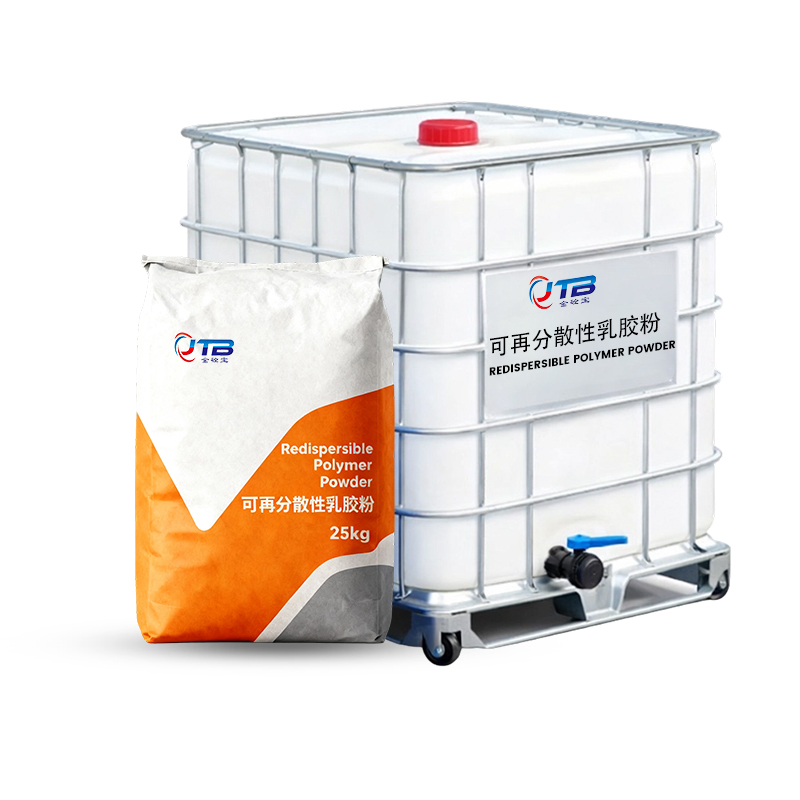 Redispersible Latex Powder (RDP)JTB- 411/JTB- 450 is a vinyl acetate-ethylene redispersible copolymer emulsion powder (RDP).View Product →
In factory-blended bagged mortars, this redispersible powder re-emulsifies the moment mix water is added, which is why pre-batched polymer mortars hold their consistency and color more reliably than site-batched attempts to copy them.
On a datasheet the differences look incremental; on site they decide whether the patch stays in place. The table below summarizes the practical gap under the same substrate preparation.
| Property | Unmodified cement-sand mortar | Polymer-modified repair mortar |
|---|---|---|
| Pull-off bond to substrate | Commonly below 1.0 MPa; bond-line failure is the norm | Typically 1.5–2.5 MPa or higher; failure in the substrate is the goal |
| Water absorption | Open capillary network absorbs water and chlorides | Polymer film blocks capillaries; absorption drops sharply |
| Flexural behavior | Brittle; cracks under movement and vibration | Higher tensile and flexural strength; tolerates micro-movement |
| Layer thickness range | Thick sections only; feather edges crumble | Thin-bond repairs from a few millimetres up to 30–40 mm per pass |
| Repair durability | Corrosion resumes at the bond gap | Slows chloride ingress and carbonation at the patch edge |
Two numbers deserve special attention. One is pull-off bond strength: a repair that cannot hold at least 1.5 MPa to sound, roughened concrete will eventually pop regardless of its compressive strength. The other is the allowed layer thickness, because thin-bond capability — applying and compacting mortar directly against the substrate without formwork — is what lets you restore profile on columns, beams, and deck edges efficiently.
polymer repair mortar formulated for structural concrete spall repair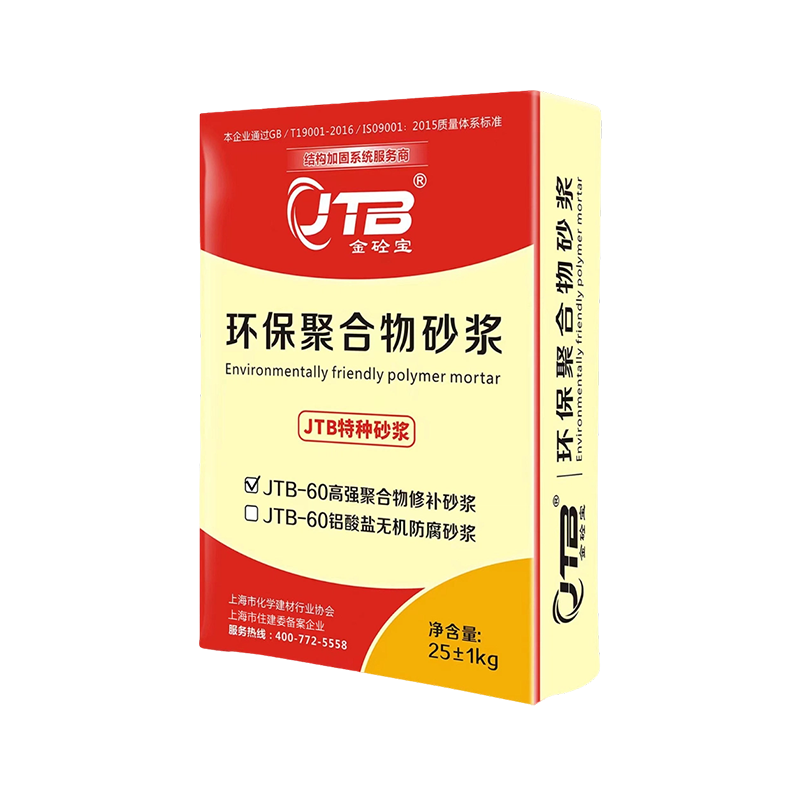 Polymer Repair MortarJTB Polymer Repair Mortar is specially developed for surface repair of high-strength concrete structures. This mortar possesses the high strength properties of inorgan...View Product →
Not all polymers behave alike, and the differences show up in specific exposures. Acrylic systems retain their properties under UV and weathering, which makes them the usual choice for facades, balconies, and exposed civil structures. SBR-modified mortars are the general-purpose workhorse for structural patching. VA/E copolymers add flexibility for interior slabs and overlays. Chloroprene latex and dedicated waterproof grades hold up in permanently damp conditions — tanks, basements, marine splash zones — where ordinary mortars soften or leach.
polymer cement waterproof mortar for damp and water-exposed concrete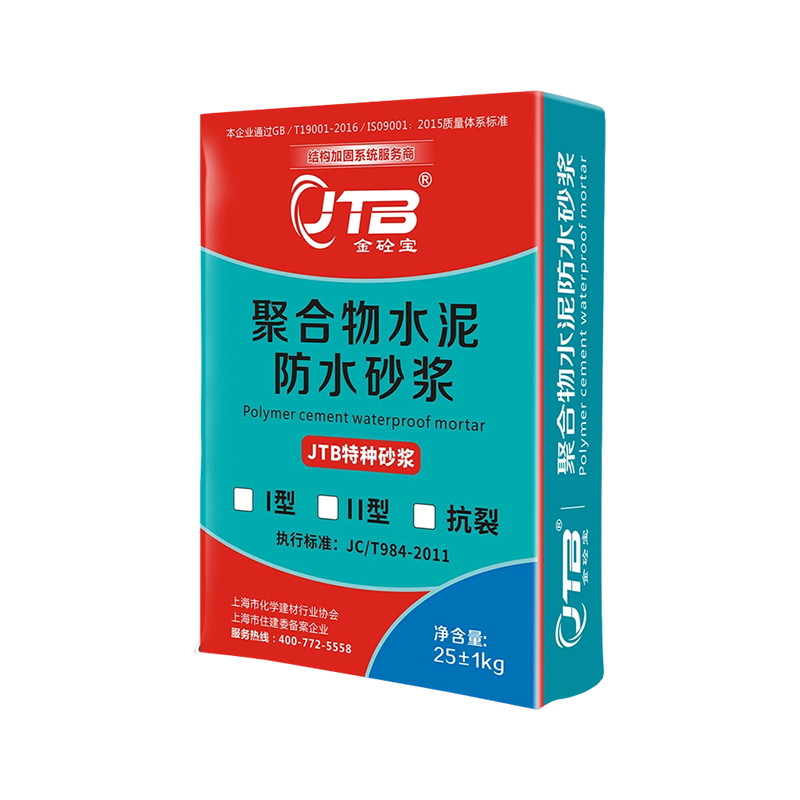 Polymer Cement Waterproof Mortar for Damp Service ConditionsA pre-blended powder of cement, quartz sand, and polymer powder delivering waterproof, crack-resistant coatings for walls, balconies, tanks, and basements. It pairs well with polymer mortars in permanently damp conditions where ordinary mixes soften or leach.View Product →
Ask suppliers for third-party test reports against these items, not just datasheet claims. A bag labelled "polymer-modified" can carry anything from an effective dose to a token sprinkle, and the datasheet rarely volunteers the polymer-cement ratio. For repairs in damp service, pair the mortar question with a waterproofing question, because the two failures reinforce each other — related polymer chemistry is compared in our overview of water resistance in polymer-modified cementitious materials.
Polymer-modified repair mortar is not for every job — full-depth structural reconstruction and mass pours belong to other systems — but it covers many of the repairs that maintenance teams actually face:
On bridge and tunnel work in particular, the mortar is rarely the whole answer; it usually sits inside a wider sequence of crack injection, rebar treatment, and surface protection. That is why infrastructure owners tend to specify from suppliers who bundle materials with engineering support, as Jintongbao does through its bridge and tunnel engineering systems, rather than buying bags from a catalog and hoping the sequence works out.
Even a good mortar cannot fully compensate for poor preparation. The sequence below reflects what actually holds up in the field:
If your crew is new to these repairs, a written method statement helps less than a walk-through. The step-by-step guide to applying concrete repair mortar covers the same sequence with working tolerances you can copy straight into your own instructions.
Many failed patches trace back to a handful of repeated mistakes:
The procurement risk mirrors the application risk: both come from assuming "polymer-modified" is one product. Treat every purchase as a specification exercise — verify polymer type, dosing evidence, and test data — and treat every application as a process with the same discipline you would demand for structural concrete.
A patch restores section loss; it does not by itself restore load capacity or stop the causes of deterioration. In practice, polymer-modified repair mortar works alongside epoxy crack injection for moving fissures, interface bonding agents for difficult substrates, and carbon fiber reinforcement when a member needs capacity back. Specifying these as one compatible system — from a supplier who can support the sequence on site — is what turns isolated patches into durable structural repairs.
 Polymer Repair Mortar
VIEW MORE
Polymer Repair Mortar
VIEW MORE
 Polymer Cement Waterproof Mortar
VIEW MORE
Polymer Cement Waterproof Mortar
VIEW MORE
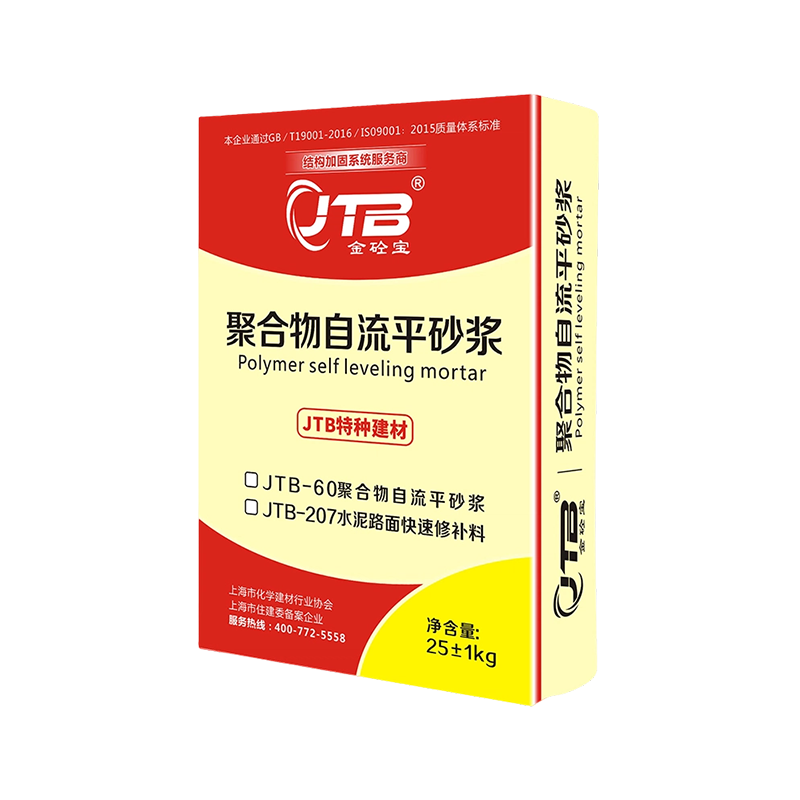 Polymer Self-Leveling Mortar
VIEW MORE
Polymer Self-Leveling Mortar
VIEW MORE
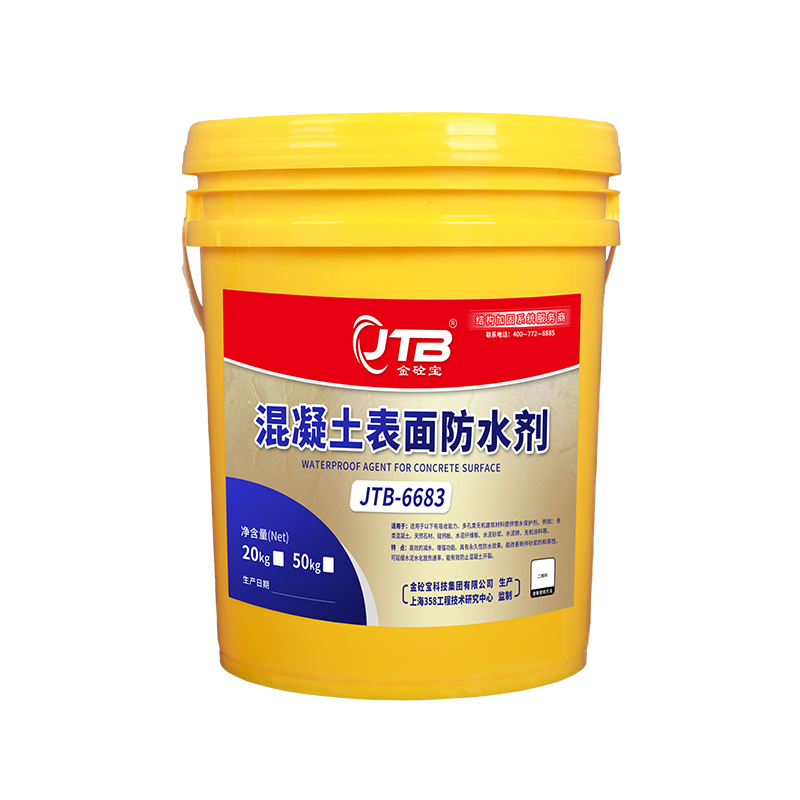 Concrete Waterproofing Admixture
VIEW MORE
Concrete Waterproofing Admixture
VIEW MORE
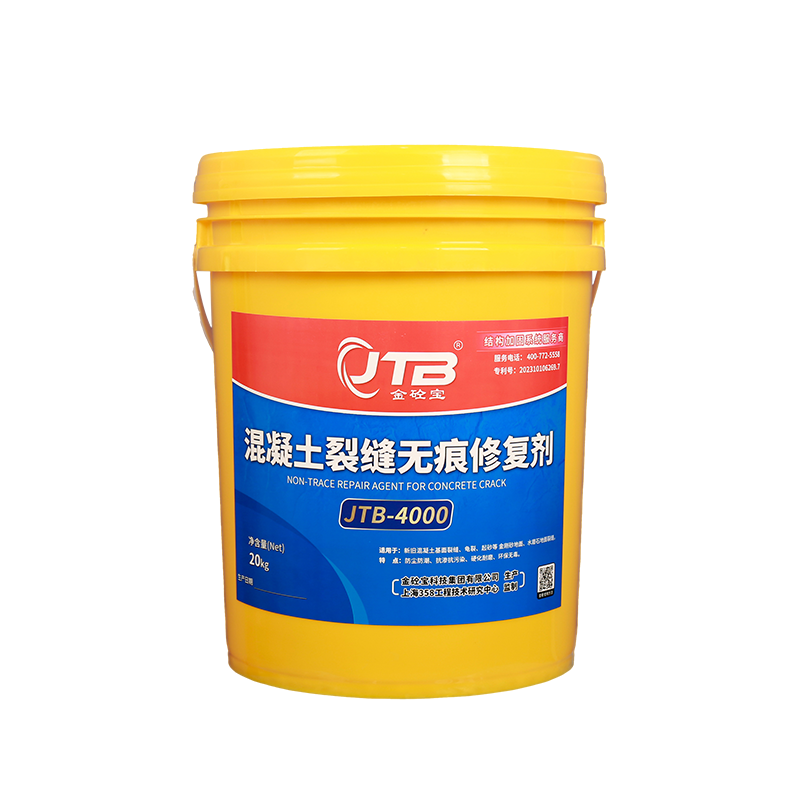 Concrete Crack Repair Agent
VIEW MORE
Concrete Crack Repair Agent
VIEW MORE
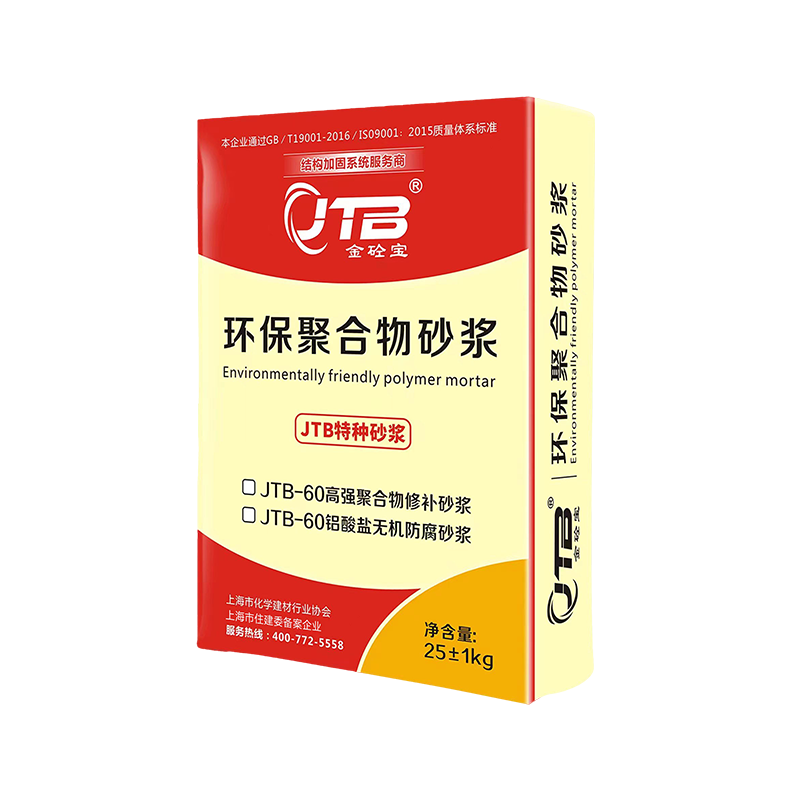 Polymer Strengthening Mortar
VIEW MORE
Polymer Strengthening Mortar
VIEW MORE
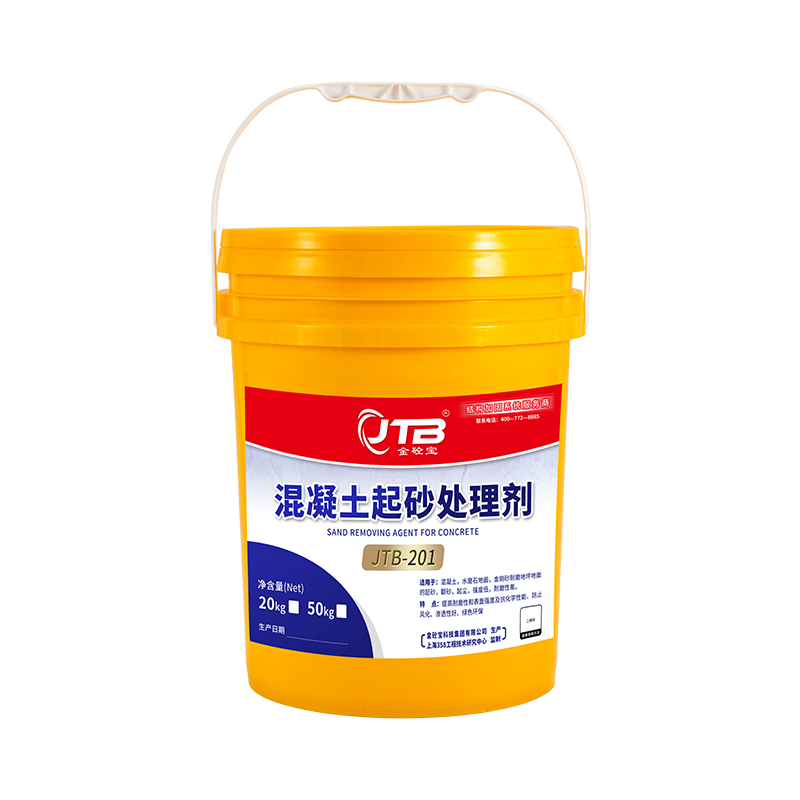 Concrete Surface Hardener
VIEW MORE
Concrete Surface Hardener
VIEW MORE
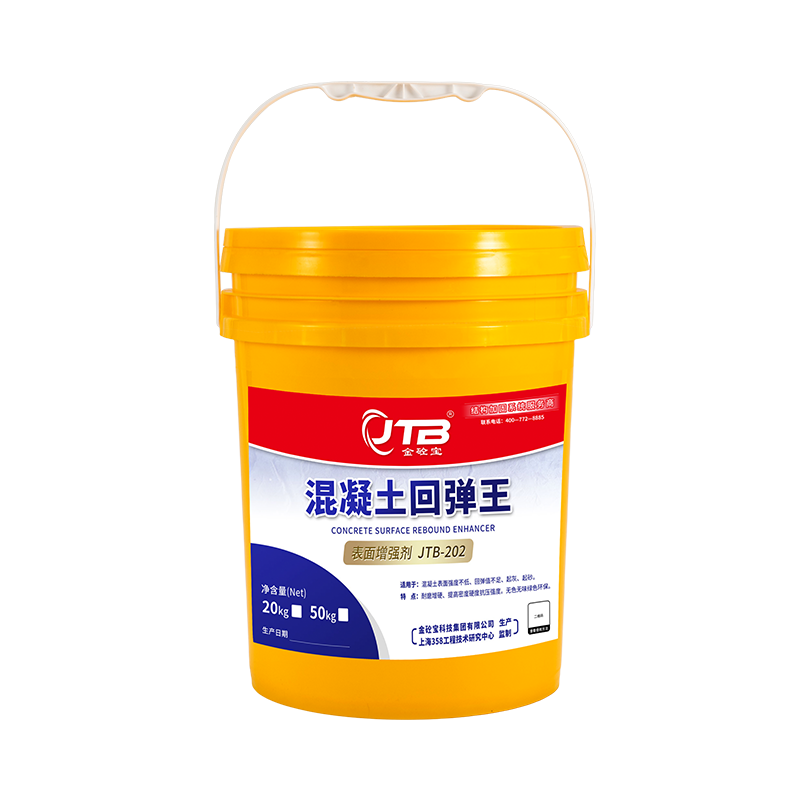 Concrete Surface Strengthener
VIEW MORE
Concrete Surface Strengthener
VIEW MORE
Technical Engineering Insights Comprehensive Chemical & Mechanical Guide to Concrete Admixtures Modern concrete de...
READ MOREA base plate sits 25 mm above a concrete foundation, and every tonne that presses, vibrates, or torques the equipment a...
READ MOREIntroduction to Sulphoaluminate Cement Sulphoaluminate cement, a specialized type of hydraulic cement, is gaining tracti...
READ MORETo use concrete repair mortar correctly: remove all loose or crumbling material down to solid concrete, clean and dampe...
READ MORE
JTB technology group is a one-stop structural strengthening system service and solution provider with more than 10 years of industry experience.

+86-138 6245 1066
400-772-5558

sales@jtbmaterials.com

Qianjin Hebei Road, Dantu District, Zhenjiang City, Jiangsu Province, China
Copyright © JTB Technology Group Co. , Ltd.All rights reserved.
Cutsom Construction Chemicals & Reinforcement Materials Manufacturer

