How Should Geopolymer Grout Be Selected for Road Repair Applications and How Does Manufacturing Consistency Affect Field Performance?
A highway section may appear intact on the surface while losing support underneath the pavement structure. This condition is often found during maintenance inspections when concrete slabs show pumping, uneven settlement, or repeated cracking near joints. The visible defect is only an indication that the supporting layer has changed. In many cases, the repair focus needs to move below the pavement surface and address the loss of contact between structural layers.
For these situations, geopolymer grout is considered for injection-based repair because the material can be delivered into narrow void areas without removing large sections of pavement. However, selecting a grout material is not simply a matter of choosing higher strength. The repair requirement depends on void geometry, traffic loading, foundation condition, and the expected service environment.
Repair Decisions Begin With Understanding What Happens Below the Pavement
A concrete pavement slab relies on continuous support from the underlying base and subgrade layers. When water infiltration, repeated vehicle loading, or foundation movement creates voids beneath the slab, the load transfer mechanism changes. The unsupported area may increase stress concentration during braking and heavy traffic operation.
In underground cavity filling projects, the grout needs to travel through the injection path and occupy irregular spaces beneath the structure. For pavement base reinforcement, the material must create a stable connection between the existing layer and the repaired zone. These two situations may occur on the same road network but require different material considerations.
| Field Condition |
Observed Engineering Issue |
Material Selection Focus |
| Concrete slab with underlying voids |
Reduced contact area and uneven load transfer |
Filling capacity, flow retention, bonding with existing concrete |
| Road section affected by settlement |
Loss of foundation support and elevation change |
Volume stability and hardened structural strength |
| Heavy traffic pavement repair |
Repeated dynamic loading after reopening |
Early strength development and fatigue resistance |
| Restricted urban repair area |
Limited access and short construction window |
Pumpability and construction adaptability |
Material Performance Should Match the Actual Repair Mechanism
A geopolymer grout used for road rehabilitation needs to balance several properties rather than focusing on a single laboratory value. Flowability determines whether the material can reach hidden spaces, while hardened strength and interface bonding influence how the repaired area responds to future loading.
For pavement void repair, excessive shrinkage after curing may reduce contact between the grout and surrounding structure. This is why volume stability is considered together with compressive strength. A grout system that maintains stable volume after hardening can continue supporting load transfer between the pavement slab and foundation layer.
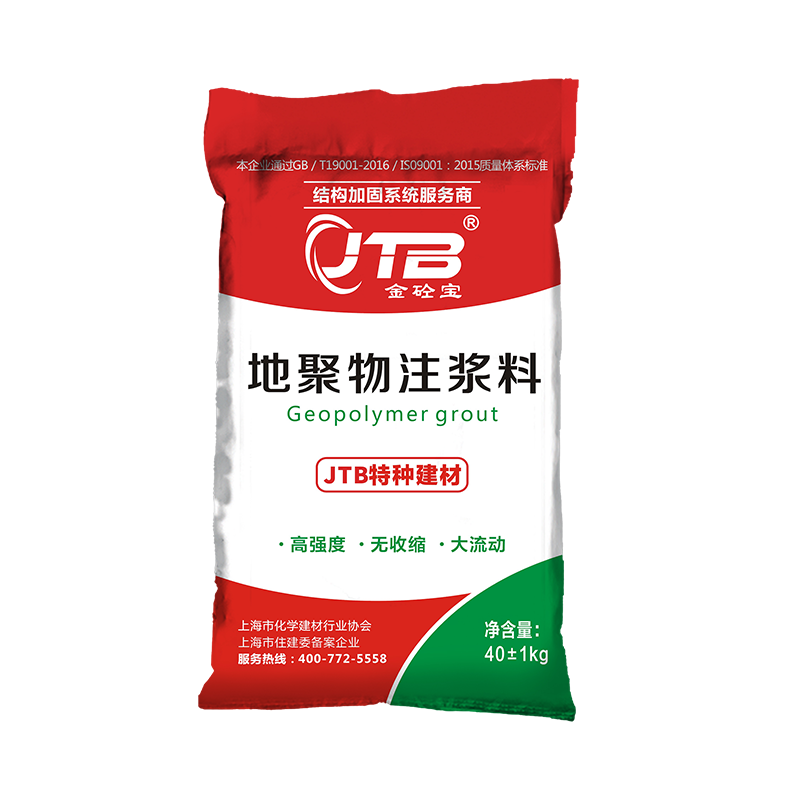
JTB Geopolymer Grout is developed for injection applications including underground cavity filling, road subsidence repair, subgrade stabilization, and foundation reinforcement. The material uses a controlled formulation to achieve flowability during injection while developing strength after curing.
| Engineering Requirement |
Evaluation Direction |
Typical Application Concern |
| Injection performance |
Flow behavior and filling distance |
Whether hidden cavities can be completely treated |
| Structural recovery |
Compressive and flexural strength development |
Whether repaired areas can withstand repeated loading |
| Long-term stability |
Volume change and permeability control |
Whether secondary settlement may occur |
Early Strength Development Needs to Consider Traffic Operation Requirements
Road maintenance projects are often carried out under strict traffic control conditions. The available construction period may be limited to specific hours, especially for highways, airport pavement areas, and urban roads with high traffic volume.
The strength development process of grout affects when the repaired section can return to service. JTB Geopolymer Grout technical data indicates compressive strength development reaching ≥20 MPa at 3 days, ≥40 MPa at 7 days, and ≥50 MPa at 28 days. These values provide reference for project teams when evaluating curing schedules and load requirements.
In addition to compressive strength, flexural strength and bonding characteristics influence the behavior of pavement repair areas because road structures are exposed to bending stress, vibration, and repeated impact loads.
Manufacturing Control Influences Consistency During Large Repair Programs
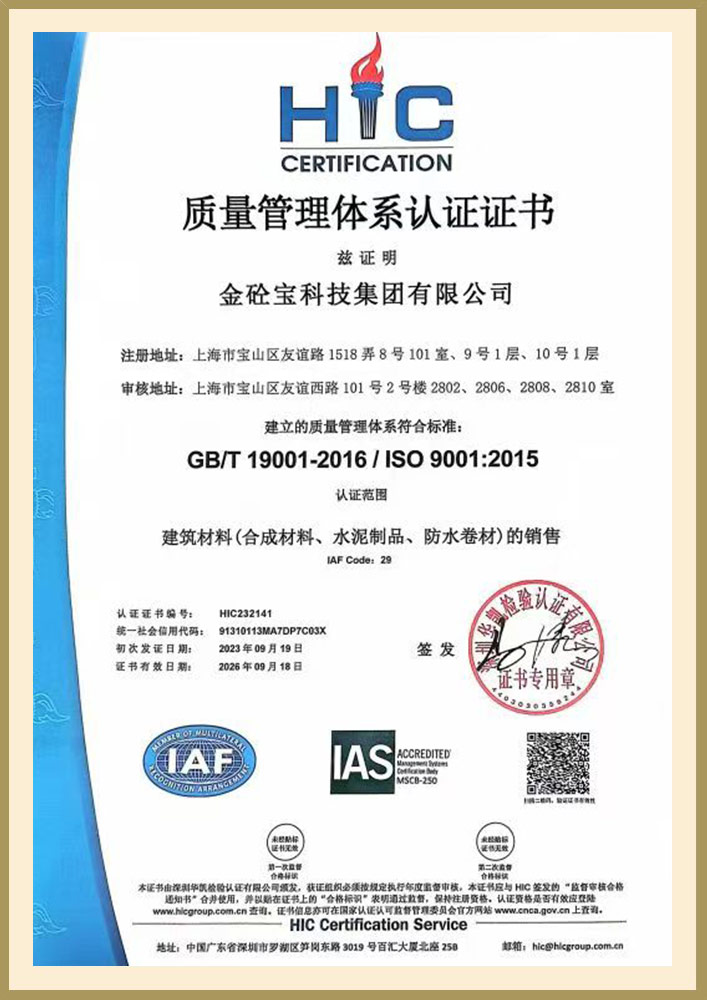
A road rehabilitation project may require material delivery across multiple construction sections over several weeks. Under these conditions, the difference between production batches can affect mixing behavior, pumping efficiency, and final curing performance.
Manufacturing consistency involves raw material inspection, formulation control, production process management, and quality verification. Small variations in particle distribution or component proportion may change grout viscosity, setting characteristics, and strength development.
For large infrastructure maintenance projects, predictable material behavior is closely related to construction scheduling. Contractors need grout that maintains similar characteristics from the first injection point to the final repair location.
Large-Scale Supply Capability Supports Complex Infrastructure Projects
The demand for grouting materials changes significantly between a single repair location and a regional infrastructure maintenance program. Large projects require not only technical performance but also stable production organization and delivery coordination.
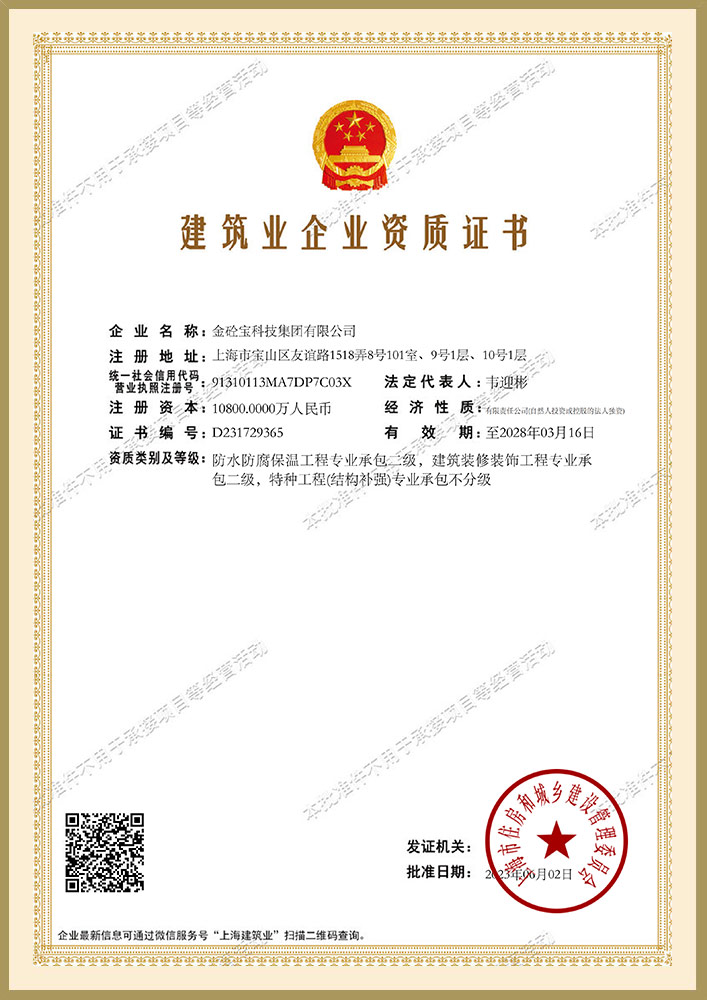
JTB Technology Group Co., Ltd. integrates research and development, production, sales, and construction services within reinforcement system solutions. The company operates production bases in Zhenjiang, Jiangsu Province, Jinhua, Zhejiang Province, and Dongguan, Guangdong Province, with total production capacity exceeding 1,000,000 tons.
The Zhenjiang production base provides standardized manufacturing conditions for grouting materials and related reinforcement products. Continuous production capability supports projects where material supply schedules need to match construction progress, especially in applications involving highways, tunnels, and large structural maintenance programs.
Laboratory Testing Needs to Connect With Field Construction Conditions
Laboratory performance data provides important reference, but road repair materials are ultimately used under changing field conditions. Temperature variation, moisture exposure, existing concrete strength, and construction equipment can influence the final repair result.
Material research for geopolymer grout involves evaluating properties such as flow performance, compressive strength development, permeability characteristics, and durability behavior. These evaluations help establish how the material responds when applied to different infrastructure environments.
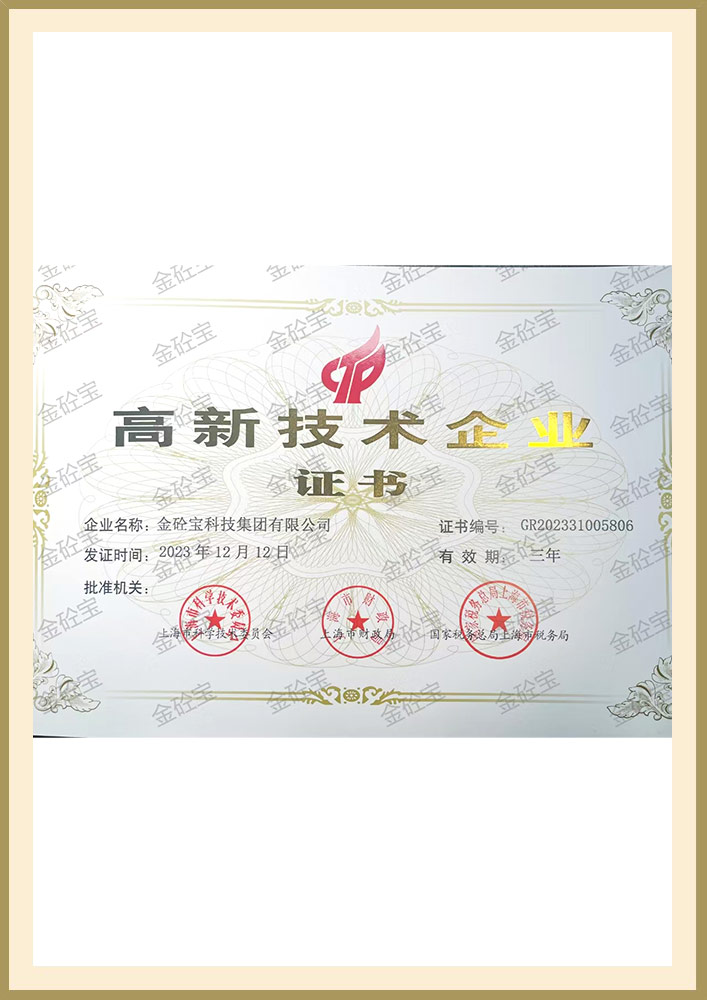
JTB Technology Group Co., Ltd. focuses on reinforcement-related technology development and applies engineering experience to material research. The company promotes the concept of moving from reinforcement toward pre-reinforcement, emphasizing earlier identification of structural risks before they develop into larger repair requirements.
Construction Control Determines Whether Material Performance Can Be Achieved
Even when the selected grout meets project requirements, construction procedures directly influence the final condition of the repaired structure. Surface preparation, drilling accuracy, pipe installation, mixing ratio, injection pressure, and curing management all affect the interaction between the grout and existing pavement.
Before injection, loose particles, dust, oil contamination, and unstable materials should be removed from the repair area. During construction, controlling the injection process helps ensure that the grout reaches the intended treatment zone rather than creating uneven filling conditions.
For JTB Geopolymer Grout application, the recommended water-to-material ratio is controlled within 28%-30% during mixing. Proper proportion control helps maintain material workability and supports consistent performance during pumping and curing.


 en
en
 English
 Español