How Does Post-Tensioning Duct Grout Protect Prestressing Tendons Against Corrosion and Why Does Manufacturing Consistency Matter for Large Grouting Projects?
A bridge can maintain its designed appearance for many years while corrosion risks are developing inside the post-tensioning system. In prestressed concrete structures, the steel tendons inside ducts carry long-term tensile forces, and the condition of the surrounding grout directly affects their protection. Once moisture, chlorides, or aggressive substances enter an unfilled or poorly filled duct area, corrosion may develop in locations that are difficult to detect during routine inspection.
This is why post-tensioning duct grout is not only a filling material. It forms a protective environment around prestressing tendons, reduces direct exposure to external factors, and helps maintain the connection between the tendon system and surrounding concrete structure. The selection of grout material needs to consider corrosion protection requirements, duct configuration, construction conditions, and long-term service environment.
Corrosion Protection Starts With Complete and Stable Duct Filling
The main function of post-tensioning duct grout is to fill the internal space around prestressing tendons after tensioning work is completed. A properly filled duct reduces the possibility of water accumulation and limits pathways for corrosive substances to reach the steel surface.
In practical bridge construction, duct geometry is often complex. Curved ducts, vertical sections, anchor zones, and long-distance tendon paths create different challenges during grouting. If grout cannot maintain suitable flow characteristics during injection, unfilled sections may remain inside the duct. These hidden voids can become potential areas where moisture collects over time.
The relationship between grout performance and corrosion protection is closely connected with several material characteristics:
| Engineering Condition |
Potential Risk |
Grout Performance Requirement |
| Long horizontal tendon ducts |
Incomplete filling due to material settlement |
Stable flowability and controlled bleeding |
| Curved or complex duct layouts |
Air pockets and isolated void areas |
Continuous filling capability and pumping adaptability |
| Coastal or humid environments |
Chloride and moisture exposure |
Low permeability and corrosion resistance support |
| Large bridge structures |
Long-term maintenance difficulty |
Durable hardened grout structure |
Material Properties Influence Long-Term Tendon Protection
Post-tensioning duct grout performance cannot be judged only by compressive strength. The internal condition of the hardened grout layer has a direct relationship with corrosion protection. A material with stable volume characteristics and controlled permeability can provide a more consistent protective environment around prestressing steel.
Bleeding control is one of the important considerations in duct grouting. Excess water separation during curing may create weak zones or small channels inside the duct. These areas may reduce the continuity of protection around the tendon.
Volume stability is another factor related to long-term reliability. When hardened grout experiences excessive shrinkage, the contact between the grout and duct wall may decrease. A controlled expansion system helps maintain filling integrity after curing and supports the transfer of stresses between the tendon, grout, and surrounding concrete.
For post-tensioning applications, engineers and project teams usually consider multiple technical indicators rather than selecting materials based on a single value. The actual requirement depends on structural type, environmental exposure, and construction method.
| Project Decision Factor |
Why It Matters |
Typical Evaluation Direction |
| Duct filling reliability |
Affects tendon protection condition |
Flow retention, filling distance, bleeding control |
| Environmental resistance |
Influences service life in aggressive conditions |
Permeability and chloride ion control |
| Structural compatibility |
Determines interaction with concrete members |
Bonding characteristics and volume stability |
Construction Procedures Determine Whether Material Performance Is Achieved
Even suitable duct grout requires controlled construction procedures. In large bridge projects, grouting quality is influenced by mixing accuracy, equipment condition, injection sequence, vent management, and curing conditions.
Before grouting, the duct system normally needs inspection to confirm that the pathway is unobstructed. During mixing, maintaining the designed water-to-material ratio helps control grout consistency and prevents excessive changes in viscosity. The injection process needs to maintain continuous material flow until grout reaches the designated outlet points.
Temperature conditions can also influence construction results. In high-temperature environments, setting characteristics may change faster, while low temperatures can affect strength development. Construction planning needs to consider local climate conditions, transportation time, and curing requirements.
Large Infrastructure Projects Require Stable Manufacturing Consistency
A post-tensioning grouting project may involve thousands of tendon ducts across multiple construction stages. When material characteristics change between batches, differences may appear during mixing, pumping, and curing. These variations can increase difficulty in maintaining consistent construction quality.
Manufacturing consistency involves more than maintaining the same formula. It includes raw material control, production process management, equipment calibration, and quality inspection procedures. Particle distribution, additive proportion, and moisture control during production can influence final grout behavior.
For large-scale infrastructure projects, stable production allows construction teams to organize work according to planned schedules. Material availability and batch consistency become part of project risk management, especially for bridges and other structures where post-tensioning systems are critical components.
Production Capacity Supports Continuous Supply for Complex Projects
Large bridge construction and maintenance projects often require continuous material supply across different construction periods. A supplier’s manufacturing capability affects not only delivery efficiency but also the ability to maintain consistent product characteristics throughout the project.
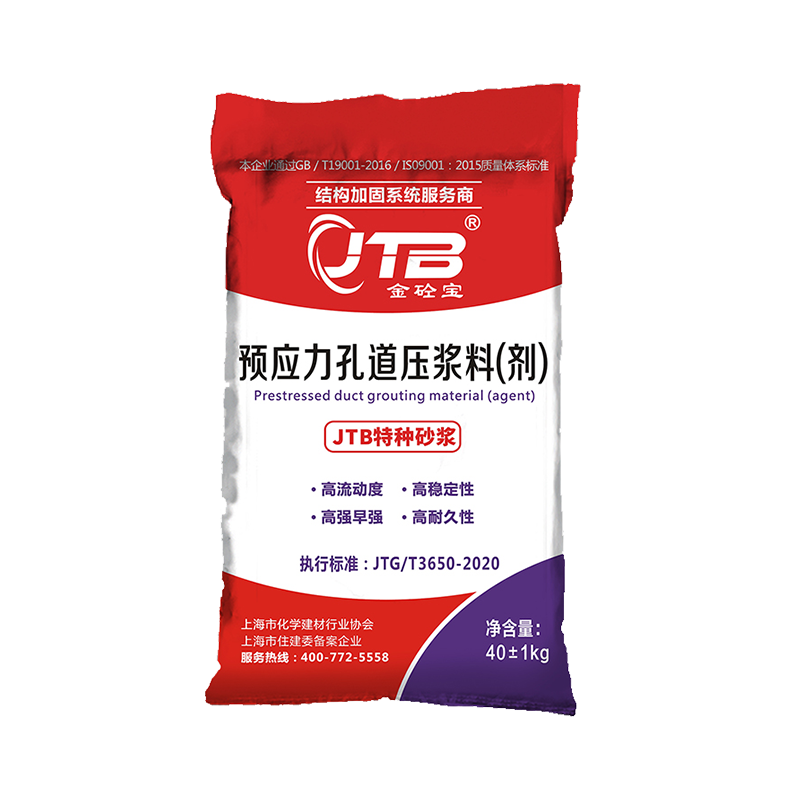
JTB Technology Group Co., Ltd. integrates research and development, production, sales, and construction services within reinforcement system solutions. The company operates production bases in Zhenjiang, Jiangsu Province, Jinhua, Zhejiang Province, and Dongguan, Guangdong Province, with total production capacity exceeding 1,000,000 tons.
The Zhenjiang production base provides standardized manufacturing conditions for grouting materials and related reinforcement products. Its large-scale production organization supports projects requiring continuous supply, including bridge construction, structural rehabilitation, and infrastructure reinforcement applications.
Research and Engineering Experience Support Material Development
Post-tensioning grout technology continues to face changing requirements from modern infrastructure projects. Longer service periods, more complex structural designs, and stricter durability expectations require materials that can adapt to different engineering conditions.
Material research involves laboratory testing combined with application feedback. Performance evaluation may include flow behavior, strength development, volume change monitoring, permeability assessment, and durability-related testing.
JTB Technology Group Co., Ltd. focuses on reinforcement-related technology development and applies engineering experience to product research and application. The company has promoted the concept of moving from reinforcement toward pre-reinforcement, emphasizing early identification of structural risks and targeted technical solutions before major deterioration occurs.
Post-Tensioning Grouting Quality Depends on the Entire Engineering Process
The protection of prestressing tendons is influenced by the complete chain from material formulation and manufacturing control to field injection procedures. A suitable grout material, controlled production process, and proper construction execution work together to reduce risks inside post-tensioning systems.
For bridge owners, contractors, and infrastructure maintenance teams, evaluating post-tensioning duct grout requires consideration of both technical performance and project execution capability. The long-term condition of the tendon system depends on how effectively each stage of the grouting process is controlled.


 en
en
 English
 Español