Specialty Additives in Cement-Based Materials: Connecting Formula Control with Long-Term Infrastructure Protection
A repair project can reveal material compatibility problems before structural damage appears
During a concrete repair project, a common situation is that the repair mortar meets the initial strength requirement but later shows surface shrinkage, weak bonding areas, or uneven hardening. The issue may not come from one single material. Cement, mineral fillers, water, and specialty additives interact throughout mixing, hydration, and curing. If the components are not compatible, the final performance of the cement-based system can change under actual construction conditions.
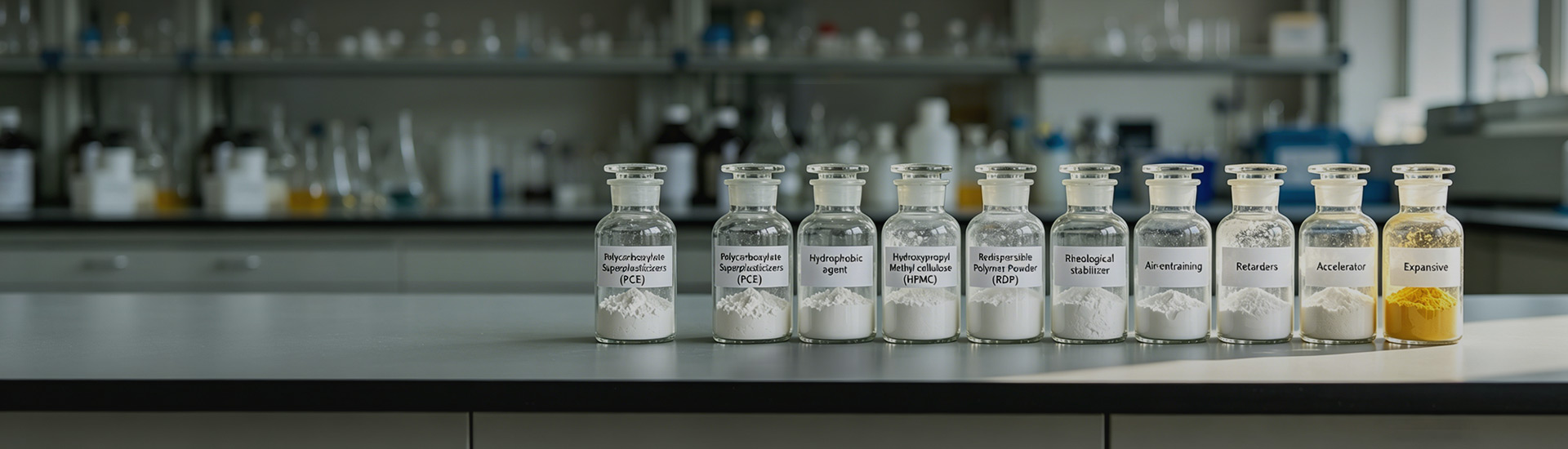
Specialty additives are designed to adjust specific characteristics of cement-based materials, including flow behavior, water retention, setting control, adhesion, shrinkage management, and durability. However, the selection of an additive cannot be separated from the characteristics of the base material. Cement chemistry, particle distribution, moisture conditions, and construction environment all influence how an additive performs inside the mixture.
For infrastructure maintenance projects, this interaction becomes more important because repair materials are often applied in complex environments. Bridge components exposed to temperature cycles, underground structures affected by moisture, and urban renewal projects with limited construction windows all require materials that can maintain stable behavior after placement.
Compatibility between cement components and additives affects the final material structure
A cement-based system is a dynamic process rather than a simple combination of powder and water. After mixing, hydration reactions begin, particles rearrange, and internal pores gradually develop. Specialty additives influence these processes by changing water movement, particle dispersion, and the connection between different material phases.
For example, water-retention additives can influence how quickly moisture leaves the mortar layer, especially when applied on highly absorbent concrete surfaces. Shrinkage-control components may affect volume change during curing, while polymer-related additives can modify bonding behavior at the interface between old and new materials.
The compatibility evaluation usually needs to consider several material conditions rather than focusing on one laboratory value.
| Material condition |
Potential influence on cement-based systems |
Compatibility consideration |
| Cement type and hydration characteristics |
Changes setting behavior and strength development |
Adjustment of additive dosage and reaction control |
| Mineral filler and particle grading |
Affects packing density and workability |
Balance between flow performance and stability |
| Existing concrete substrate condition |
Influences bonding and moisture exchange |
Select additives suitable for interface requirements |
| Construction temperature and humidity |
Changes evaporation rate and curing process |
Maintain workable performance under field conditions |
Real engineering conditions often determine additive selection more than laboratory data
A formulation developed under controlled conditions may behave differently when transferred to a construction site. A repair material used in a coastal area may face higher humidity and chloride exposure, while a tunnel repair project may involve restricted ventilation and continuous moisture conditions.
In bridge rehabilitation work, the repair layer must establish a reliable connection with existing concrete. The additive system needs to support adhesion development while controlling shrinkage during curing. In underground structures, water migration and long-term durability become important factors because the repair material may remain exposed to changing environmental conditions.
These situations require a different way of evaluating specialty additives. Instead of asking only whether an additive improves one property, project teams usually need to consider how the additive changes the entire material system.
| Engineering scenario |
Main material concern |
Decision focus |
| Bridge concrete repair |
Interface bonding and volume stability |
Compatibility with existing concrete and curing conditions |
| Tunnel maintenance |
Moisture exposure and long-term protection |
Resistance to environmental changes |
| Urban structure renovation |
Limited construction time and variable substrates |
Workability and application adaptability |
| Industrial facility repair |
Repeated mechanical loading |
Material stability after hardening |
Specialty additives support the shift from repairing defects to controlling risks earlier
Traditional maintenance often begins after visible problems appear, such as cracking, surface deterioration, or loss of structural function. However, infrastructure management is gradually paying more attention to early-stage protection and preventive measures.
Specialty additives contribute to this approach by improving the behavior of cement-based materials from the beginning of construction or repair. When the material system is designed according to service conditions, potential risks related to shrinkage, poor bonding, and insufficient durability can be considered before they develop into larger maintenance problems.
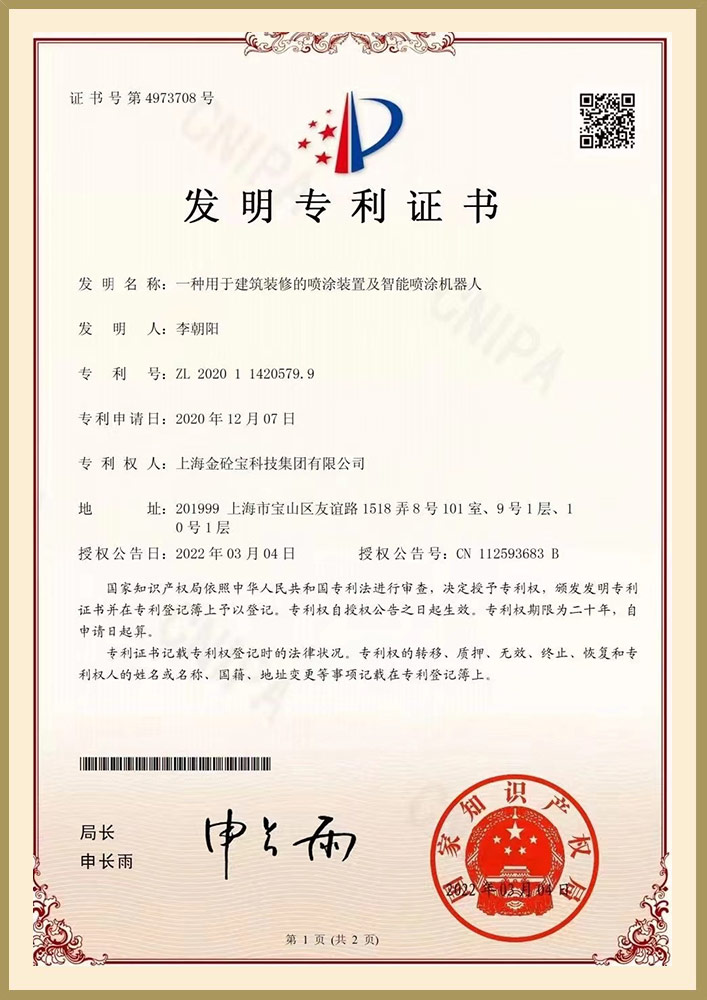
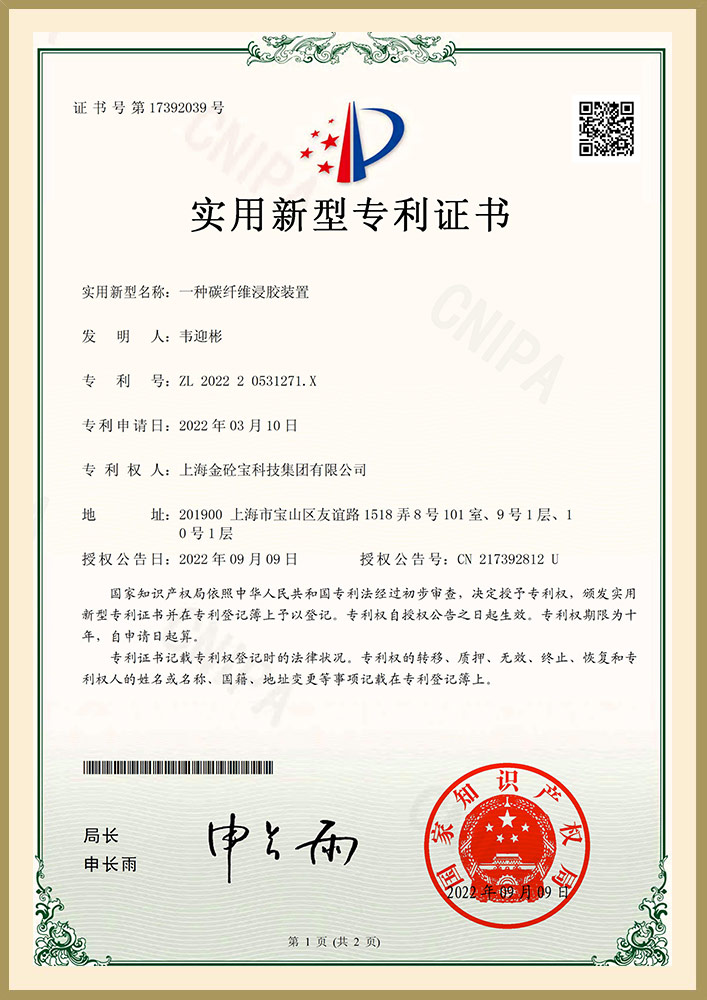
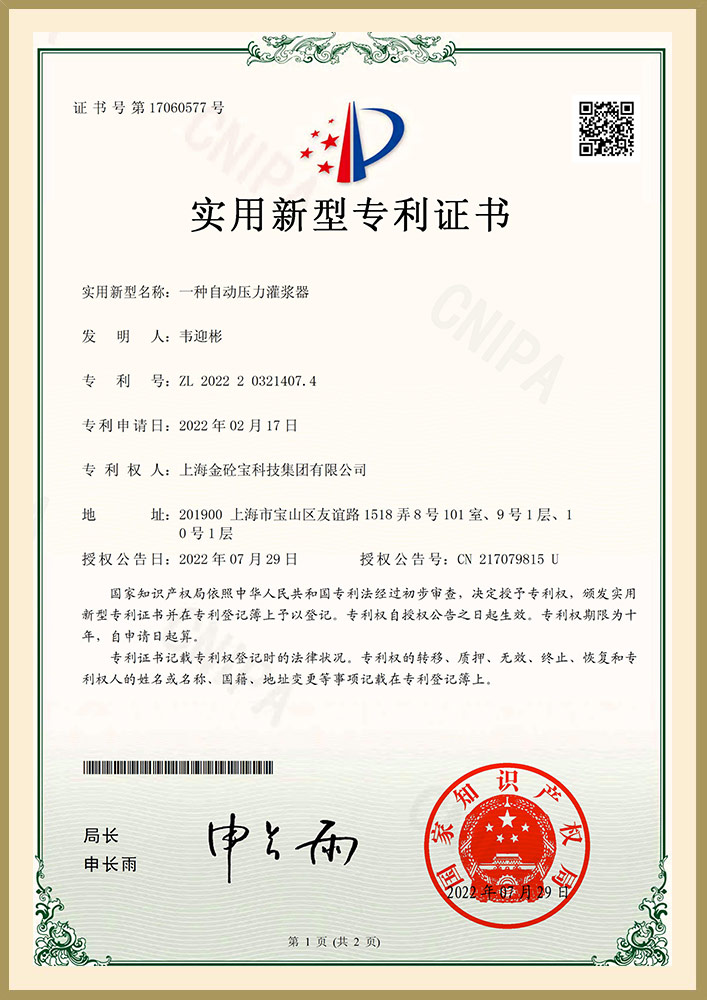
The concept of moving from reinforcement toward pre-reinforcement is closely related to this change in engineering thinking. JTB Technology Group Co., Ltd. has focused on reinforcement system solutions by integrating research, production, sales, and construction services, providing experience in connecting material development with actual infrastructure requirements.
Production control becomes a key factor when specialty additives are supplied for large projects
For large infrastructure projects, material consistency is closely related to construction management. Even a small variation in additive characteristics may affect mortar mixing, pumping behavior, setting time, or final surface condition when materials are used continuously over a long period.
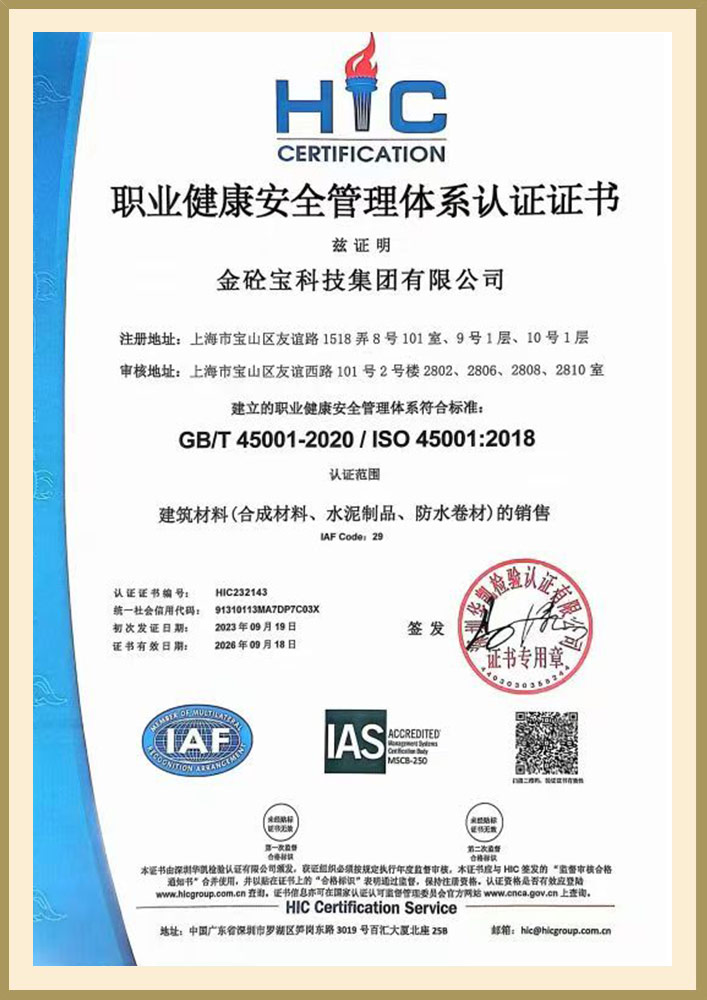
Manufacturing control involves raw material inspection, formulation accuracy, production process management, and finished product testing. These procedures help maintain similar characteristics between different production batches and reduce unexpected changes during field application.
With three production bases located in Zhenjiang, Jiangsu Province, Jinhua, Zhejiang Province, and Dongguan, Guangdong Province, JTB Technology Group Co., Ltd. has established a manufacturing structure that supports large-scale material supply. The Zhenjiang facility provides production capacity within this system through standardized equipment and continuous manufacturing processes.
| Project requirement |
Supplier capability to consider |
Engineering reason |
| Long-term material supply |
Stable production process |
Reduce differences between construction batches |
| Multi-location projects |
Regional supply coordination |
Support consistent material availability |
| Customized applications |
Technical development capability |
Adapt formulations to specific conditions |
Research capability connects laboratory testing with construction experience
The development of specialty additives requires more than adjusting formulas through isolated experiments. Material performance needs to be verified through different application scenarios, including mixing processes, placement conditions, curing environments, and long-term service requirements.
Research facilities equipped with testing instruments allow manufacturers to study changes in fluidity, hydration behavior, mechanical development, and durability-related characteristics. The information collected from these evaluations can support further formulation adjustments for different engineering applications.
JTB Technology Group Co., Ltd. places technical innovation within its development strategy and has established research resources to support material technology improvement. By combining production experience with engineering application requirements, specialty additive solutions can be developed with closer attention to real construction conditions.
Material decisions for infrastructure projects depend on the relationship between formula, production, and application
Choosing specialty additives for cement-based systems involves understanding the complete chain from raw materials to finished structures. A suitable additive system needs to match the cement composition, construction environment, production process, and expected service conditions.
For contractors and material suppliers, the evaluation process usually returns to practical factors: whether the formulation remains stable, whether production can maintain consistency, and whether the material can adapt to changing site conditions.


 en
en
 English
 Español