Why Production Consistency Matters for Large Structural Concrete Repair Projects and How Should Repair Mortar Be Selected for Bridge Rehabilitation?
A bridge rehabilitation project may appear to focus mainly on repairing visible damage, but the actual engineering challenge often exists behind the damaged surface. Concrete deterioration around bridge decks, piers, beams, and connection areas can involve multiple factors, including moisture penetration, reinforcement corrosion, freeze-thaw cycles, mechanical loading, and aging of the original concrete structure. Selecting structural concrete repair mortar requires understanding how the repair material interacts with the existing structure rather than simply choosing a material based on strength values.
For large-scale rehabilitation projects, another factor is often underestimated: production consistency. A repair system may cover hundreds or thousands of repair locations, and differences between material batches can influence mixing behavior, application quality, and final structural performance. The relationship between material formulation, manufacturing control, and construction execution becomes an important part of project management.
Bridge Rehabilitation Requires Repair Materials Matched to Actual Damage Conditions
Concrete damage in bridge structures does not always develop in the same way. A damaged edge of a bridge deck exposed to traffic loads has different requirements compared with a pier surface affected by water penetration or a beam area where reinforcement corrosion has already occurred.
When selecting structural concrete repair mortar, project teams usually need to consider the damaged location, repair thickness, loading condition, and environmental exposure. A repair material used for shallow surface restoration may require different characteristics from a material used for deeper section rebuilding or structural reinforcement areas.
| Bridge Repair Condition |
Primary Engineering Concern |
Material Selection Consideration |
| Deck surface deterioration |
Traffic load and repeated impact |
Bond strength, abrasion resistance, early strength development |
| Concrete spalling with exposed reinforcement |
Loss of protective concrete cover |
Interface bonding, low permeability, compatibility with existing concrete |
| Pier and structural member repair |
Long-term load transfer and environmental exposure |
Volume stability, durability characteristics, mechanical compatibility |
| Local repair during maintenance shutdown |
Limited construction time |
Workability, curing requirements, installation efficiency |
Interface Bonding Determines Whether Repair and Existing Concrete Work Together
One of the key issues in structural concrete repair is the connection between the new repair layer and the original concrete substrate. The repair mortar does not function independently after installation. It becomes part of the existing structural system and must maintain a stable interface under changing loads and environmental conditions.
Surface preparation has a direct influence on this connection. Dust, loose concrete particles, laitance layers, and contaminants can reduce adhesion between the repair material and the substrate. In bridge rehabilitation projects, processes such as mechanical roughening, cleaning, moisture adjustment, and substrate inspection are often necessary before application.
The repair mortar itself also requires suitable bonding characteristics and controlled shrinkage behavior. If the repair layer experiences excessive volume change during curing, internal stress may develop at the interface, increasing the possibility of cracking or separation over time.
Production Consistency Influences Large-Scale Repair Quality
A bridge rehabilitation project rarely depends on a single batch of repair mortar. Large projects may require repeated material supply over weeks or months, with different construction teams working across multiple sections. Under these conditions, consistency between production batches becomes closely related to construction control.
Changes in raw material characteristics, particle distribution, additive dosage, or mixing processes can influence properties such as flow behavior, setting time, strength development, and shrinkage control. Even small variations may create differences during application, especially when repair thickness and curing conditions need to remain consistent across large areas.
Manufacturing control includes more than final product inspection. It involves raw material management, production process monitoring, laboratory testing, and batch traceability. These procedures help maintain predictable material behavior from factory production to construction site application.
| Project Situation |
Production Factor to Consider |
Possible Construction Impact |
| Large bridge rehabilitation program |
Stable batch performance |
More consistent mixing and placement process |
| Multiple construction locations |
Reliable supply coordination |
Reduced interruption during repair operations |
| Long maintenance period |
Continuous quality monitoring |
Maintained material characteristics throughout the project |
Manufacturing Capacity Supports Infrastructure Maintenance Planning
For infrastructure rehabilitation, material availability is connected with project scheduling. A repair operation may involve traffic control plans, limited working windows, and coordinated construction activities. Delayed material supply can affect not only construction progress but also the overall maintenance arrangement.
JTB Technology Group Co., Ltd. integrates research and development, production, sales, and construction services within reinforcement system solutions. The company operates production bases in Zhenjiang, Jiangsu Province, Jinhua, Zhejiang Province, and Dongguan, Guangdong Province, with total production capacity exceeding 1,000,000 tons.
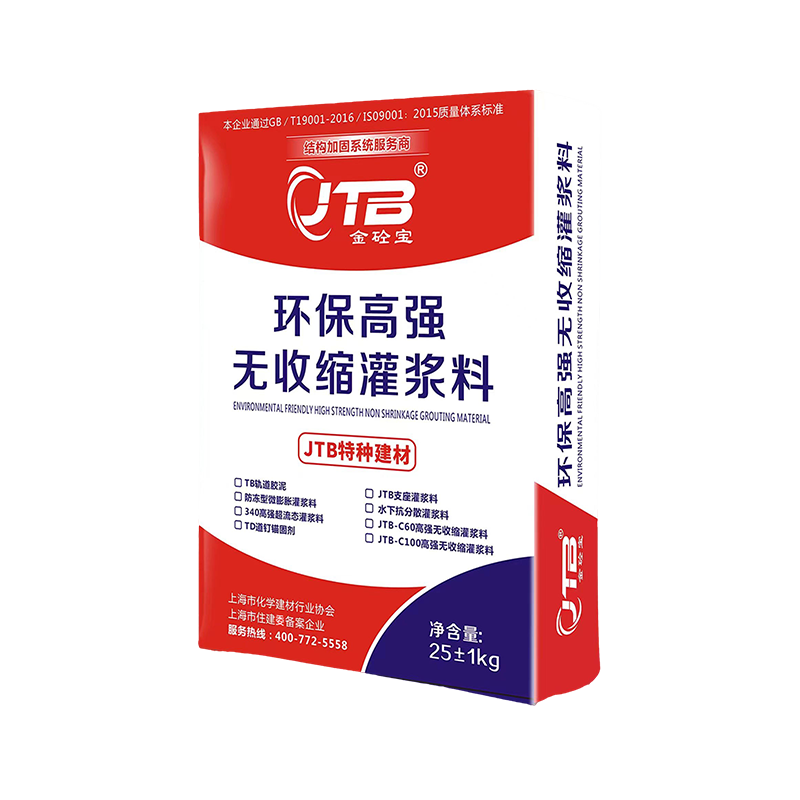
The production system, including the Zhenjiang facility, provides manufacturing support for large-volume grouting materials and related reinforcement products. Standardized production facilities and continuous manufacturing capability allow the company to respond to different project requirements where stable material supply is required.
Material Research Needs to Reflect Real Construction Conditions
Structural repair materials are developed not only through laboratory testing but also through understanding field conditions. Bridge rehabilitation involves variables that cannot always be reproduced in a controlled environment, such as substrate quality differences, temperature changes, moisture conditions, and construction accessibility.
Research and development activities may involve evaluating compressive strength development, flexural performance, bonding behavior, volume stability, permeability characteristics, and durability under simulated service conditions. These evaluations help connect material design with practical engineering requirements.
JTB Technology Group Co., Ltd. emphasizes technological development in reinforcement-related fields and combines research capability with engineering application experience. The company’s approach focuses on moving from reinforcement toward pre-reinforcement, encouraging earlier assessment of structural risks and more targeted maintenance strategies.
Construction Control Remains Essential After Material Selection
Even when a repair mortar matches the structural requirement, construction procedures influence the final result. Mixing sequence, water addition accuracy, application thickness, compaction method, and curing management all affect how the repair layer develops after installation.
For bridge repair work, the construction environment may change from one section to another. Areas exposed to traffic vibration, restricted working space, or different weather conditions require appropriate adjustments during application. Quality control throughout the repair process helps ensure that the selected material can perform according to its intended engineering purpose.
Large structural repair projects depend on the connection between material design, manufacturing stability, and field execution. The selection of repair mortar is therefore a technical decision involving structural condition assessment, construction requirements, and long-term maintenance planning.


 en
en
 English
 Español