
 en
en
 English
 Español
 Structural Strengthening System Service Provider
Product
Company
News


Content
Setting a 40-tonne compressor on its foundation looks simple until you measure the gap: typically 25 to 80 millimetres between the underside of the steel baseplate and the top of the concrete. That gap carries the entire operating load, plus vibration, thermal movement and occasional impact. Ordinary concrete is too coarse to place it, and ordinary mortar shrinks as it cures, opening micro-gaps that concentrate stress at the plate edges. The short answer to this problem is non-shrink high strength grout: a cement-based material engineered to flow into confined voids, expand slightly at exactly the right moment, and reach structural strength within days rather than weeks. This article explains how the material works, which properties actually matter on paper and on site, and how to select and place it so the performance you paid for survives contact with the job.
All cementitious materials lose volume as they cure. Water is consumed by hydration and lost to evaporation, and a conventional mortar typically shrinks by several hundred microstrain during its first week. In a pavement, this is a cosmetic issue. Under a stiff baseplate, an anchor cage or a bearing plate, it is structural: the grout face pulls away from the steel, full bearing is replaced by edge contact, and loads that should spread evenly across the plate now hammer a narrow strip of grout. Fatigue cracking, plate movement and loss of equipment alignment tend to follow.
Non-shrink grout answers this with compensation rather than luck. Two mechanisms are common: a controlled gaseous expansion that acts while the mix is still plastic, and expansive mineral agents that form new crystals during early hardening. Together they produce a small positive volume change — commonly between +0.1% and +3.5% in the first hours — which offsets subsequent shrinkage so the hardened grout remains in full contact with the plate. High cement content, well-graded aggregate and superplasticizers then deliver the second half of the promise: compressive strengths that typically reach 60 MPa or more at 28 days, with some formulations exceeding 100 MPa.
Specifications differ between standards — ASTM C1107 grades packaged nonshrink grout by height change, EN 1504-3 classifies structural repair products up to class R4, and GB/T 50448 governs cement-based grouting materials in China — but the underlying benchmarks are similar. The values below are the ones project engineers check first.
| Property | Typical benchmark | Why it matters |
|---|---|---|
| 1-day compressive strength | 20–30 MPa or higher | Allows early loading of equipment and anchor bolts |
| 3-day compressive strength | 40–50 MPa or higher | Confirms steady, predictable strength gain |
| 28-day compressive strength | 60–100+ MPa | Carries long-term static and dynamic loads |
| Initial flow | 300–340 mm spread or better | Fills complex voids without vibration |
| Vertical expansion | +0.1% to +3.5% at 3 hours | Offsets shrinkage for full bearing contact |
| Bleeding | None to trace | Prevents weak water channels at the interface |
Two practical notes follow from the table. First, early strength is not a luxury: on most equipment installations the mechanical contractor wants to torque anchor bolts and reconnect services within 24 to 72 hours, so the 1-day and 3-day values effectively decide the schedule. Second, flow and expansion are interdependent. A mix pushed to extreme flowability with excess water will bleed and lose its compensating expansion, so the benchmarks above are only valid at the water dosage stated on the bag — a point that becomes central to site practice later in this article.
The classic applications share one geometry: a load-carrying void too narrow for concrete and too critical for ordinary mortar.
Post-tensioning duct filling is related but distinct: it uses dedicated duct grout with different fluidity and corrosion-protection requirements, so it should not be treated as a drop-in substitution. For energy-sector foundations in particular — from wind farms to nuclear auxiliary structures — material selection is tied to the wider engineering system, which is why suppliers such as Jintongbao organize their grouting products within dedicated nuclear and wind power engineering systems rather than as isolated SKUs.
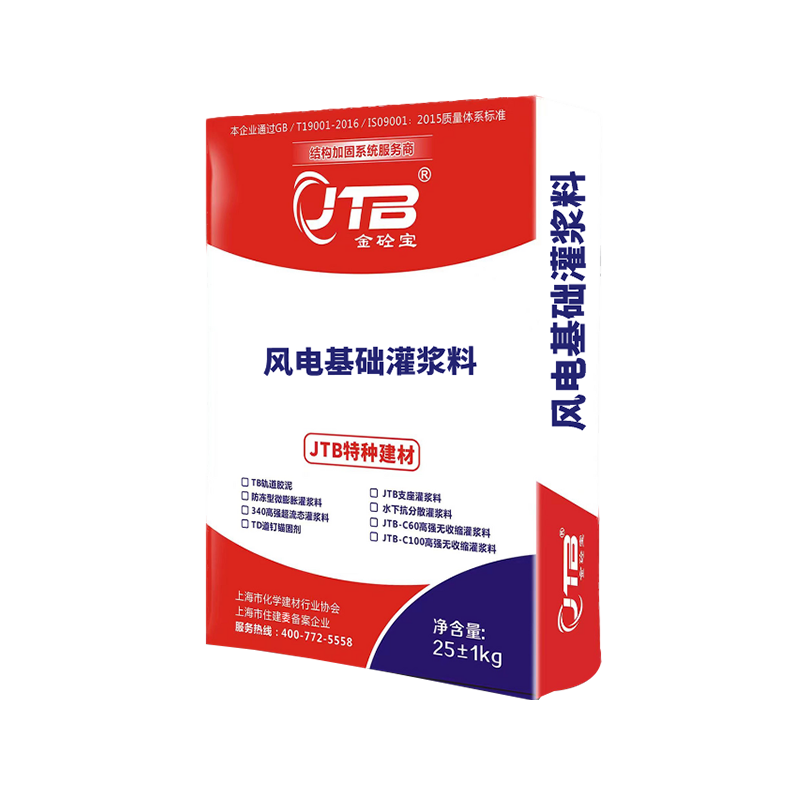 JTB C100 Wind Turbine Foundation Grout for Anchor Bolt InstallationA specialty-cement grout offering pumpability, early high strength, slight expansion and non-segregating flow. It suits large equipment foundations, making it relevant where wind-power base grouting is discussed.View Product →
Manufacturers offer several variants within the non-shrink high strength family, and the right choice comes down to two questions: what does the void look like, and what will the material experience during placement?
Heavily reinforced baseplates, deep anchor pockets and long horizontal runs demand flow reserve. A high-strength ultra-flow grout reaches initial spreads well above 300 mm while keeping aggregate in suspension, which means it can travel under a plate and around congested rebar without vibration or rodding. Where the geometry is open and gravity can do the work — typical for bearing plates with a generous pour face — a self-leveling gravity grouting mortar is often the more economical option. The rule of thumb: the more enclosed and congested the void, the more flow the formulation needs.
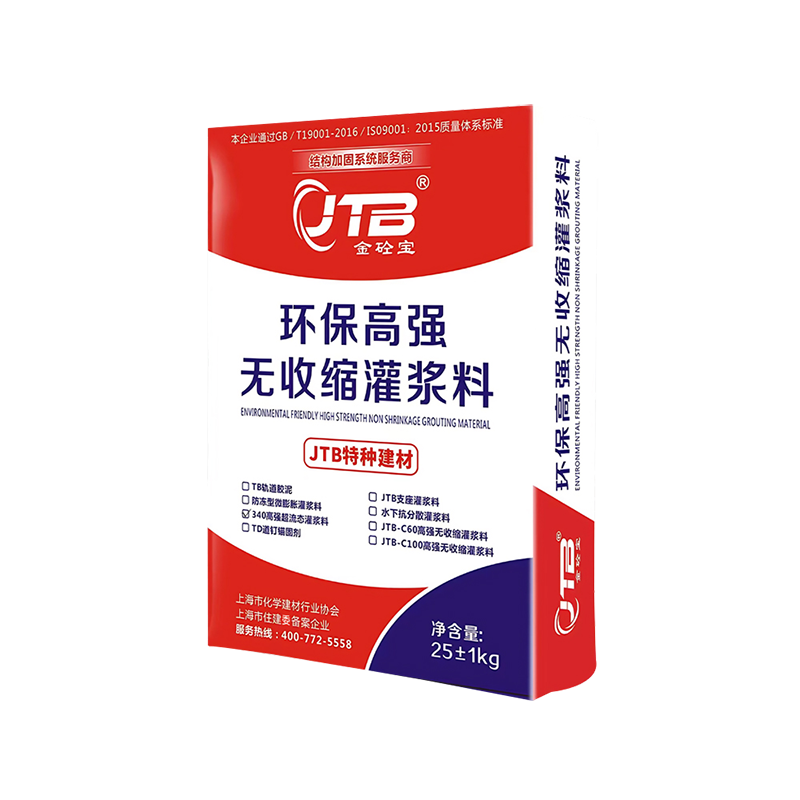 JTB High-Strength Ultra-Flow Grout for Congested SectionsWith high flowability, non-shrink performance and anti-segregation additives, this grout travels around dense rebar and enclosed voids, matching the discussion of flow reserve for baseplates and deep anchor pockets.View Product →
Temperature, water and hygiene rules narrow the field further. In underwater or tidal work, a non-dispersive grout resists washout and cures reliably in direct contact with water, which makes it the default for harbor, sluice and cofferdam repairs. Projects with strict environmental or indoor-air requirements favor low-dust, eco-friendly formulations that cut airborne particles during mixing. In hot climates, look for longer open time before the mix stiffens; in cold conditions, ask for verified low-temperature strength development data rather than relying on room-temperature figures.
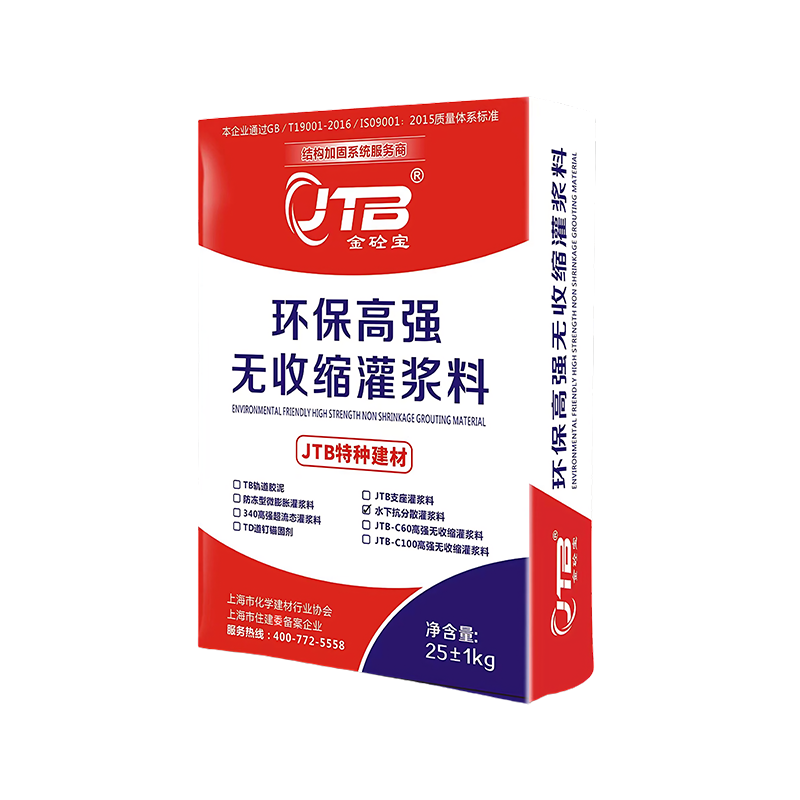 JTB Underwater Non-Dispersive Grout for Marine RepairsFormulated to resist washout and cure reliably in contact with water, this self-leveling grout fits harbor, cofferdam and underwater structural repairs, aligning with placement conditions described here.View Product →
Most grout failures trace back to placement, not to the bag. Five habits separate a sound installation from a callback:
Formwork deserves a mention too: it must be rigid and tightly sealed, because even a small leak drains the fine particles that give the grout its flow and finish. On gravity pours, maintaining a modest head of material above the plate keeps the void filling steadily from one side without air pockets.
Because the material only performs as well as its placement, it is worth choosing a supplier who stays involved after delivery. Jintongbao Technology Group, a structural strengthening system service provider, pairs its grouting product line with field technical support, remote construction guidance, and equipment-side know-how — its patents cover pressurized grouting devices, curing and compaction equipment, and grout testing apparatus, alongside certified quality, environmental and safety management systems. For buyers, that combination shortens the loop between a site problem and a corrective adjustment, and it matters most on time-critical pours such as bridge bearings and equipment restarts. The underlying principles are explored further in the company's article on the role of non-shrink high-strength grouting material in structural connections.
The selection logic compresses into four questions: what loads and tolerances must the grout carry, how wide and how congested is the void, what temperature and moisture conditions will apply during placement, and how quickly must the asset return to service. Answer those four, confirm the datasheet values against your project standard, and bring your material supplier's technical team in before the pour — that is where the value of a non-shrink high strength grout is either secured or lost.
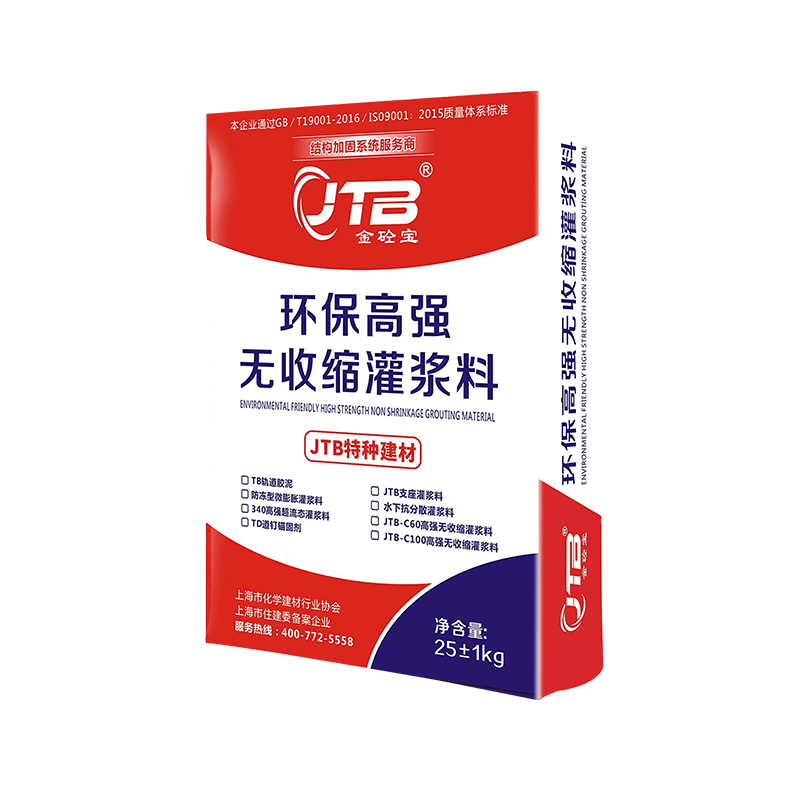 Eco-Friendly High-Strength Non-Shrink Grout
VIEW MORE
Eco-Friendly High-Strength Non-Shrink Grout
VIEW MORE
 High-Strength Ultra-flow Grout
VIEW MORE
High-Strength Ultra-flow Grout
VIEW MORE
 Underwater Non-Dispersive Grout
VIEW MORE
Underwater Non-Dispersive Grout
VIEW MORE
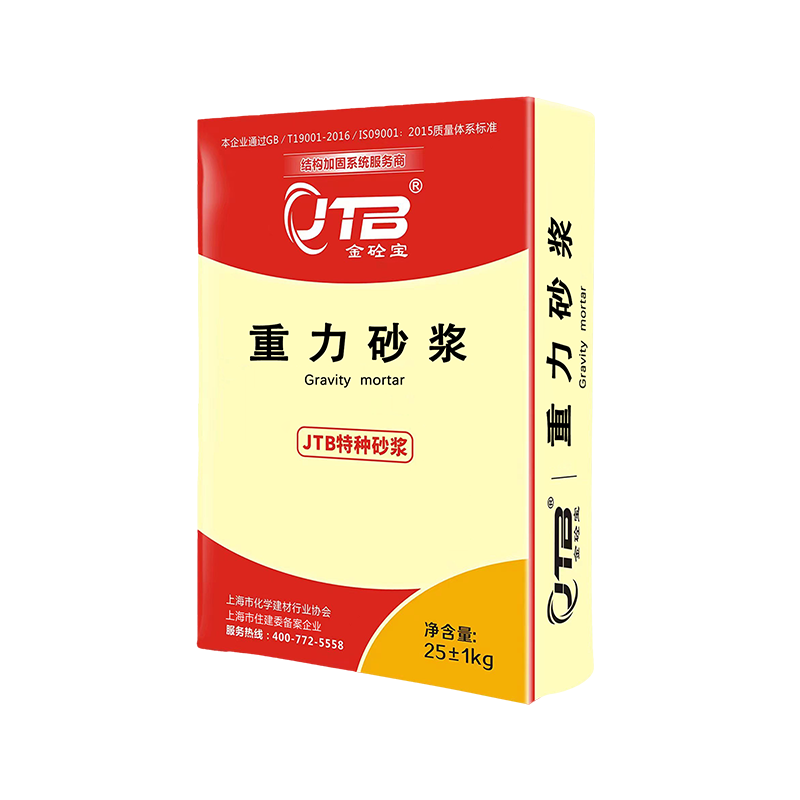 Gravity Grouting Mortar
VIEW MORE
Gravity Grouting Mortar
VIEW MORE
 Wind Turbine Foundation Grout
VIEW MORE
Wind Turbine Foundation Grout
VIEW MORE
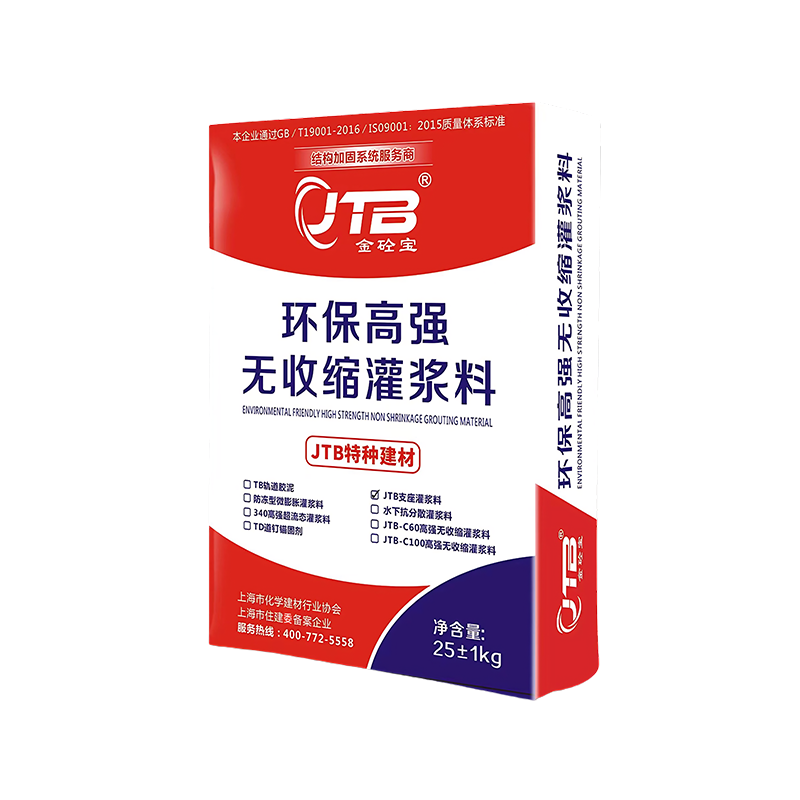 Bridge Bearing Grout
VIEW MORE
Bridge Bearing Grout
VIEW MORE
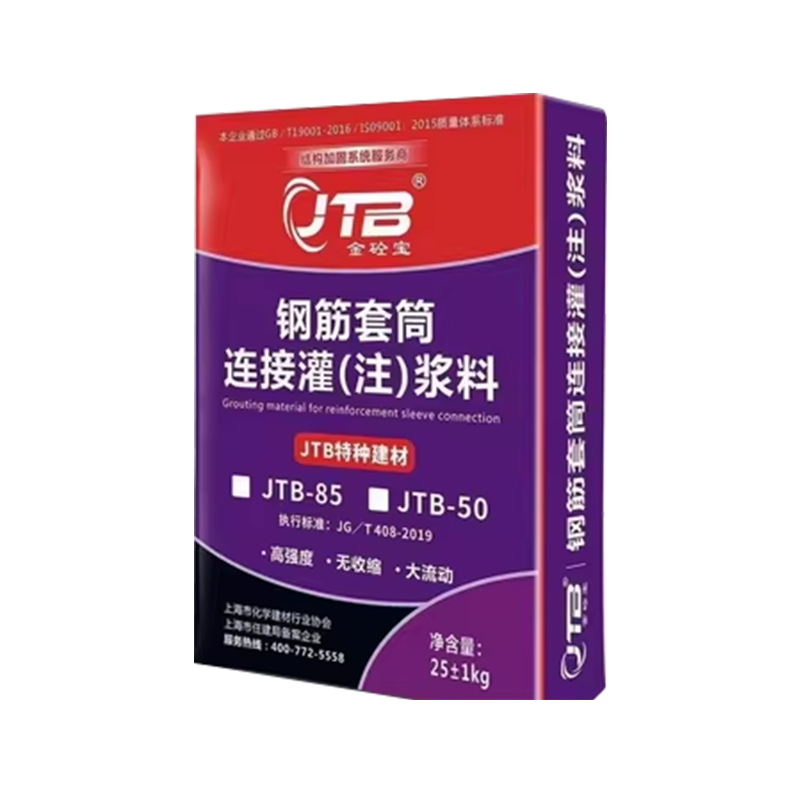 Rebar Coupler Grout
VIEW MORE
Rebar Coupler Grout
VIEW MORE
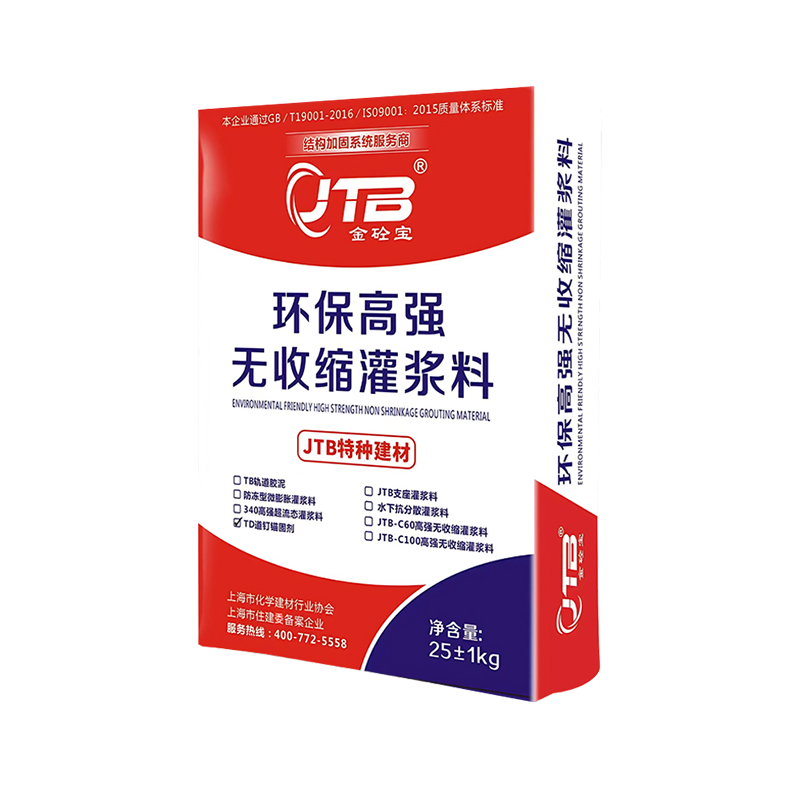 Rail Spike Anchoring Grout
VIEW MORE
Rail Spike Anchoring Grout
VIEW MORE
Introduction to High-Strength Grouting Materials In the modern construction industry, the durability and performance of ...
READ MOREPrecision grouting differs from standard concrete grouting primarily in aggregate size, flow behavior, and shrinkage co...
READ MOREA base plate sits 25 mm above a concrete foundation, and every tonne that presses, vibrates, or torques the equipment a...
READ MOREIntroduction to Tunnel Grouting Tunnel grouting is a critical process in construction and civil engineering, particularl...
READ MORE
JTB technology group is a one-stop structural strengthening system service and solution provider with more than 10 years of industry experience.

+86-138 6245 1066
400-772-5558

sales@jtbmaterials.com

Qianjin Hebei Road, Dantu District, Zhenjiang City, Jiangsu Province, China
Copyright © JTB Technology Group Co. , Ltd.All rights reserved.
Cutsom Construction Chemicals & Reinforcement Materials Manufacturer

