 en
en
 English
 Español
 Structural Strengthening System Service Provider
Product
Company
News


Content
Carbon fibre structural strengthening bonds a high-tensile fabric to the surface of an existing beam, column, or slab using a structural epoxy resin, adding load-bearing capacity without meaningfully increasing the member's thickness or weight. Once the resin cures, the carbon fabric and the underlying concrete or steel act as a single composite section, so tensile and shear forces that would otherwise concentrate in the original material are shared with the fibre layer bonded to its surface. Flexural capacity gains in the range of 30% to 50% are commonly documented for reinforced concrete beams strengthened this way, a meaningful increase achieved through a reinforcement layer often no thicker than one to two millimeters, compared to the considerably bulkier profile of a traditional steel plate bonded to the same surface.
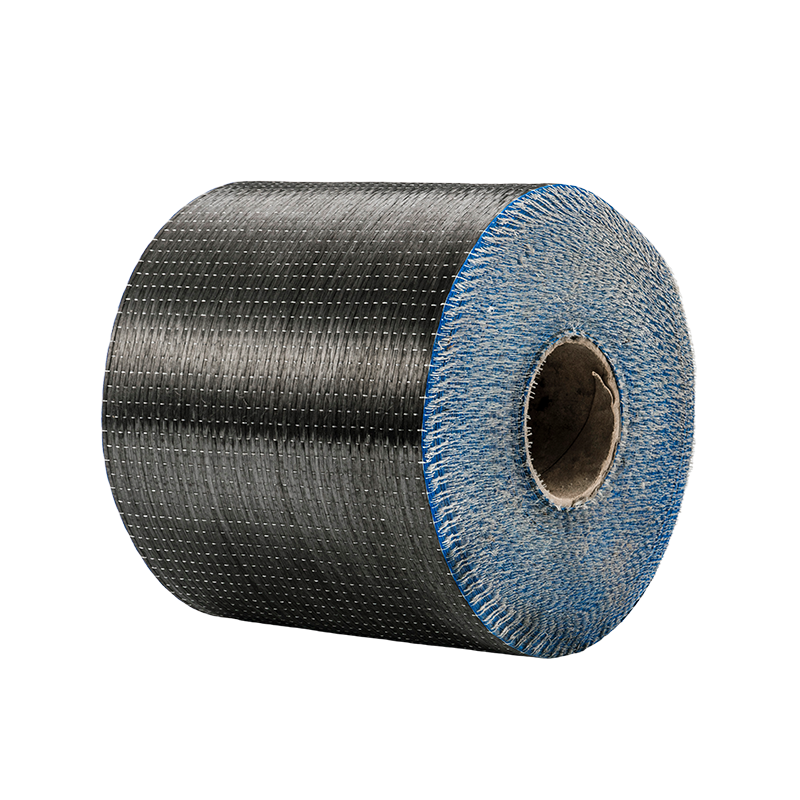
A carbon fibre reinforcement system depends on two components performing distinct roles rather than the fabric alone providing strength. The carbon fabric itself carries tensile load once stress is transferred into it, offering a tensile strength considerably higher than structural steel on a weight-for-weight basis, which is why a comparatively thin layer of fabric can meaningfully raise a member's capacity. The impregnation resin sits between the fabric and the substrate surface, and its function extends well beyond simple gluing. As a structural adhesive, the resin needs to penetrate into the pores of the concrete or the microscopic surface texture of steel, transferring stress from the base material into the fibre layer evenly across the full bonded area rather than concentrating force at isolated points that could trigger premature delamination.
Because the entire strengthening effect relies on stress transfer through the resin bond line, a poorly mixed or improperly applied resin can leave a system with visually intact fabric that nonetheless fails to deliver its designed capacity increase. This is why two-component epoxy resins formulated for carbon fibre reinforcement specify a precise mixing ratio between the resin and hardener components, since deviation from that ratio changes the cured adhesive's mechanical properties and can reduce both bonding strength and long-term durability under sustained load.
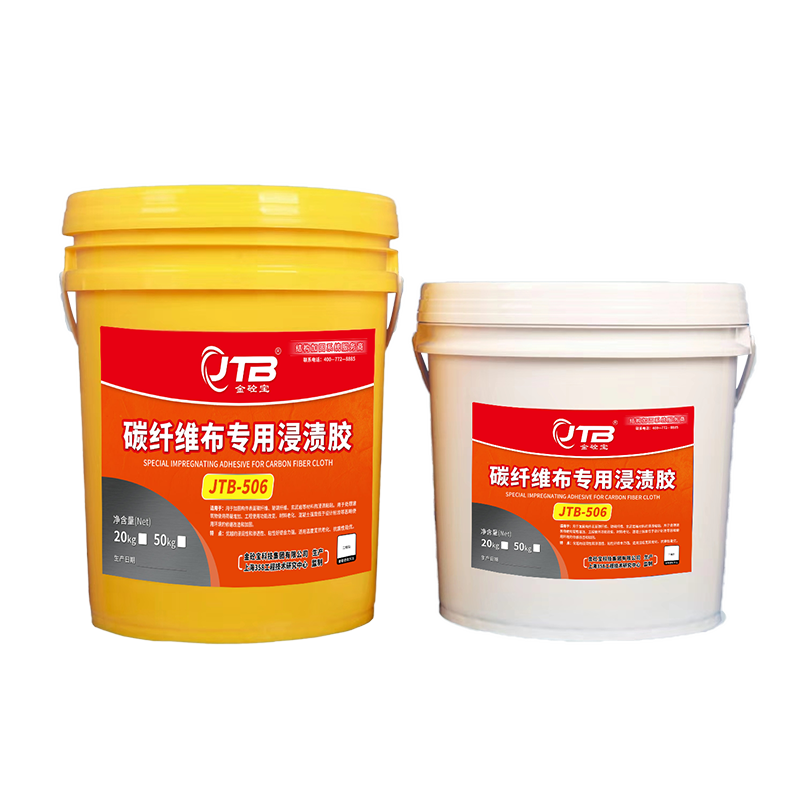
Carbon Fiber Impregnation Resin is the two-component epoxy adhesive formulated specifically to saturate carbon fabric and bond it to a concrete or steel substrate, and its performance depends on a combination of properties working together rather than any single characteristic. A precise mixing ratio between the resin and hardener components determines the cured adhesive's final mechanical strength, and even a modest deviation from that ratio can leave the bond line softer or more brittle than the design intends. Strong penetrating ability allows Carbon Fiber Impregnation Resin to soak fully into both the woven fabric and the prepared substrate surface, since any unfilled voids at the bond interface become weak points where cracking or delamination can begin under repeated loading cycles.
On concrete substrates, this penetration extends into the surface pore structure created during surface preparation, anchoring the cured resin mechanically into the material rather than relying on adhesion at the surface alone. On steel substrates, penetration works somewhat differently, since steel lacks the porosity of concrete, and bond strength instead depends heavily on surface roughness created through abrasive blasting before resin application. High bonding strength across both material types enhances load-bearing capacity, crack resistance, and long-term durability by keeping the fibre layer fully engaged with the substrate under sustained structural load, rather than allowing localized bond failure to spread across the reinforced area.
Structural strengthening has traditionally relied on methods such as steel plate bonding or enlarging a member's cross-section by adding new concrete around the existing structure, and each approach carries different practical trade-offs compared to carbon fibre wrapping.
| Method | Added Thickness | Corrosion Risk |
|---|---|---|
| Steel plate bonding | 6–12 mm | Present, requires coating |
| Section enlargement | 50–150 mm | Low, but adds significant weight |
| Carbon fibre wrapping | 1–2 mm | Minimal, fibre itself does not corrode |
Steel plate bonding adds meaningful weight and thickness to a member, and the steel itself remains vulnerable to corrosion over time unless protected with additional coatings that require ongoing maintenance. Section enlargement increases a member's cross-section substantially, which can restrict usable floor space or clearance in a building and adds considerable dead load to the surrounding structure. Carbon fibre wrapping avoids both of these drawbacks, since the fabric itself does not corrode and the added thickness rarely affects clearance or usable space in a meaningful way, though it depends entirely on the resin bond remaining intact, which places greater importance on correct surface preparation and application technique than either alternative method requires.
Applying a carbon fibre strengthening system generally follows a sequence that begins with substrate preparation, since bond quality depends heavily on the condition of the surface receiving the fabric. Concrete surfaces are typically ground or abrasive-blasted to remove laitance and expose a sound, slightly textured surface, while any cracks or spalled sections are repaired before the reinforcement layer is applied. Once the surface is prepared, Carbon Fiber Impregnation Resin is mixed to its specified two-component ratio and applied as a primer coat, followed by a saturating layer that impregnates the carbon fabric as it is pressed into place, working out air bubbles that could otherwise create voids at the bond interface. A final resin coat seals the fabric surface, and the system is left to cure under controlled temperature conditions, since resin cure rates and final mechanical properties are sensitive to ambient temperature and humidity during the curing window.
Columns in seismic retrofit projects represent one of the more common applications, where carbon fibre is wrapped circumferentially around a column to provide confinement, restraining the concrete core and improving its ability to deform without losing load-bearing capacity during ground motion. Beams and slabs in both residential and industrial buildings are strengthened when a change in use increases load demands beyond what the original design accounted for, such as converting a residential floor into commercial storage space or accommodating heavier equipment in an industrial facility than the structure was originally designed to carry.
Parking structures and bridge decks frequently use carbon fibre strengthening to address deterioration from long-term exposure to moisture and de-icing chemicals, since repairing and reinforcing the affected concrete with a fibre system avoids the disruption and cost associated with full structural replacement. Heritage buildings present a related but distinct use case, where strengthening needs to preserve the original architectural fabric and visual appearance, and the thin, low-profile nature of carbon fibre reinforcement allows structural upgrades to proceed without altering the visible dimensions of the original beams, columns, or slabs being reinforced.
Introduction to Sulphoaluminate Cement Sulphoaluminate cement, a specialized type of hydraulic cement, is gaining tracti...
READ MOREA base plate sits 25 mm above a concrete foundation, and every tonne that presses, vibrates, or torques the equipment a...
READ MOREIntroduction to Tunnel Grouting Tunnel grouting is a critical process in construction and civil engineering, particularl...
READ MOREIntroduction to High-Strength Grouting Materials In the modern construction industry, the durability and performance of ...
READ MORE
JTB technology group is a one-stop structural strengthening system service and solution provider with more than 10 years of industry experience.

+86-138 6245 1066
400-772-5558

sales@jtbmaterials.com

Qianjin Hebei Road, Dantu District, Zhenjiang City, Jiangsu Province, China
Copyright © JTB Technology Group Co. , Ltd.All rights reserved.
Cutsom Construction Chemicals & Reinforcement Materials Manufacturer